Repair By Zone
Sectioned Repairs
- Damage
- Clustered at fans, joints, drains
- Equipment Zones
- Curbs loose, membrane intact nearby
- Drains
- Bowls cracked or bolts missing
- Production
- Work splits around shifts
- Next Step
- Repair zone by zone
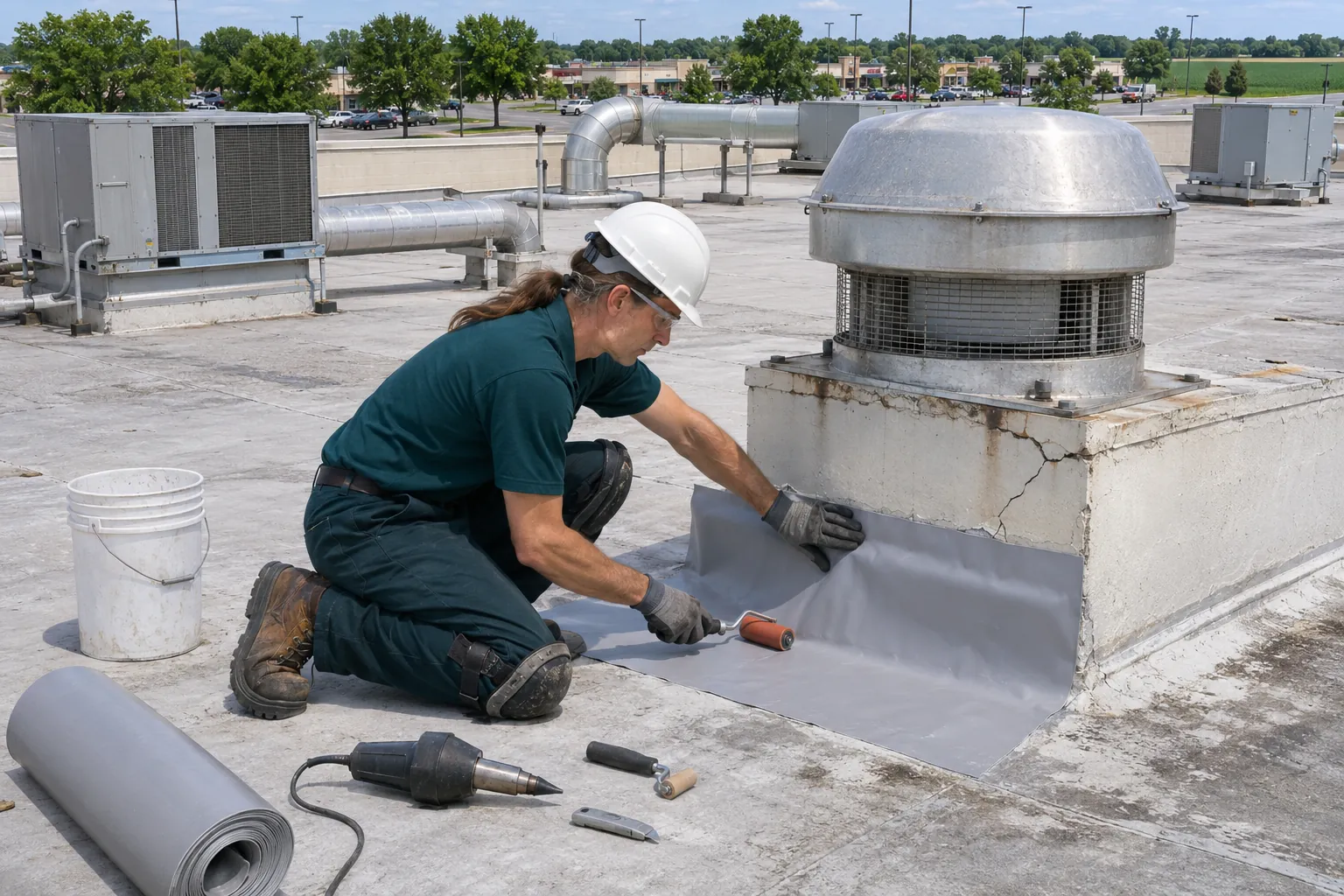
As a Merrillville industrial roof repair contractor, we repair fan curbs, drains, expansion joints, and residue-damaged membrane on plant roofs.
Merrillville industrial roof repair works section by section. These cards show when sections are enough and when a larger roof project is the honest answer.
Industrial roofs fail around the equipment that makes them industrial. These signs come up most often.
Grease or chemical residue from the exhaust settles on the roof and softens the membrane around the curb.
Cut out the softened area, patch with residue-resistant sheet, and add a sacrificial pad around the fan.
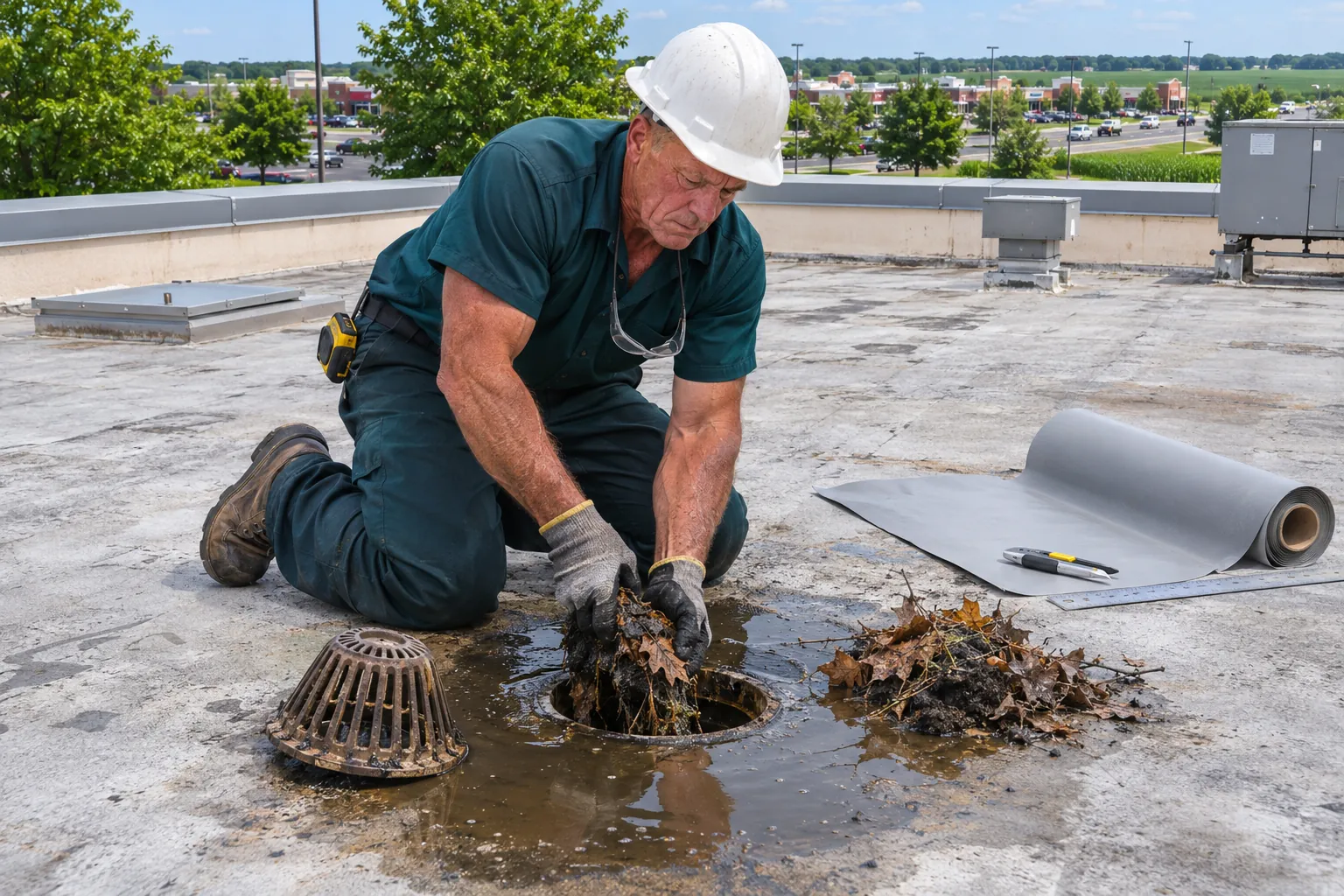
A cracked bowl, missing clamp bolts, or a sagging deck keeps water from reaching the drain opening.
Replace the bowl or bolts, reseat the membrane under the clamp ring, and correct the sag.
The joint cover has pulled loose or split from years of the building moving with temperature.
Refasten or replace the cover and flash both sides into the membrane.
Daily foot traffic to equipment grinds through the surface along the same route.
Patch the worn path and lay walkway pads from the hatch to each unit.
Each repair is sized to one zone, so the rest of the plant keeps running.
Loose curbs get refastened, reflashed, and sealed at the base so vibration stops working water inside.
Strainers, clamp-ring bolts, and cracked bowls get replaced and the membrane reseated under a fresh seal.
Split or loose covers are refastened or replaced, then flashed into the roof on both sides.
Pads laid along service routes keep boots and carts off the membrane between the hatch and the equipment.
Each repair targets one way a working plant roof breaks down.
Exhaust residue keeps softening membrane until it splits around the fan.
Resistant patches and pads hold up where residue lands.
One bad drain on a large roof can back water across thousands of square feet.
Rebuilt bowls and reseated membrane move water off again.
Building movement opens the joint and lets water fall onto the floor below.
Refastened covers flex with the building and stay sealed.
Service visits wear a path that eventually cracks and leaks.
Walkway pads carry the traffic so the membrane stays whole.
A leak over a line can stop work or ruin product. A call gets the opening covered and the area mapped for a planned repair.
Call UsSend the address and your shutdown dates. We will walk the roof ahead of time and line up repairs zone by zone.
Send roof details for an estimateAccess points, safety rules, hot-work limits, and production times get set before the crew goes up.
Fans, stacks, curbs, drains, and expansion joints get checked zone by zone and marked on a roof sketch.
Repairs above the line or stock come first; lower-risk areas get scheduled for the next window.
Each zone is opened, repaired, and sealed in the same shift so nothing is left open over production.
Spring and fall walks, plus checks after big storms, keep drains clear and curbs sealed between repairs.
Plants often include office wings and steel additions. These repairs cover them.
Office wings and loading dock canopies on plant sites usually carry flat membrane roofs that need their own seam and drain repairs.
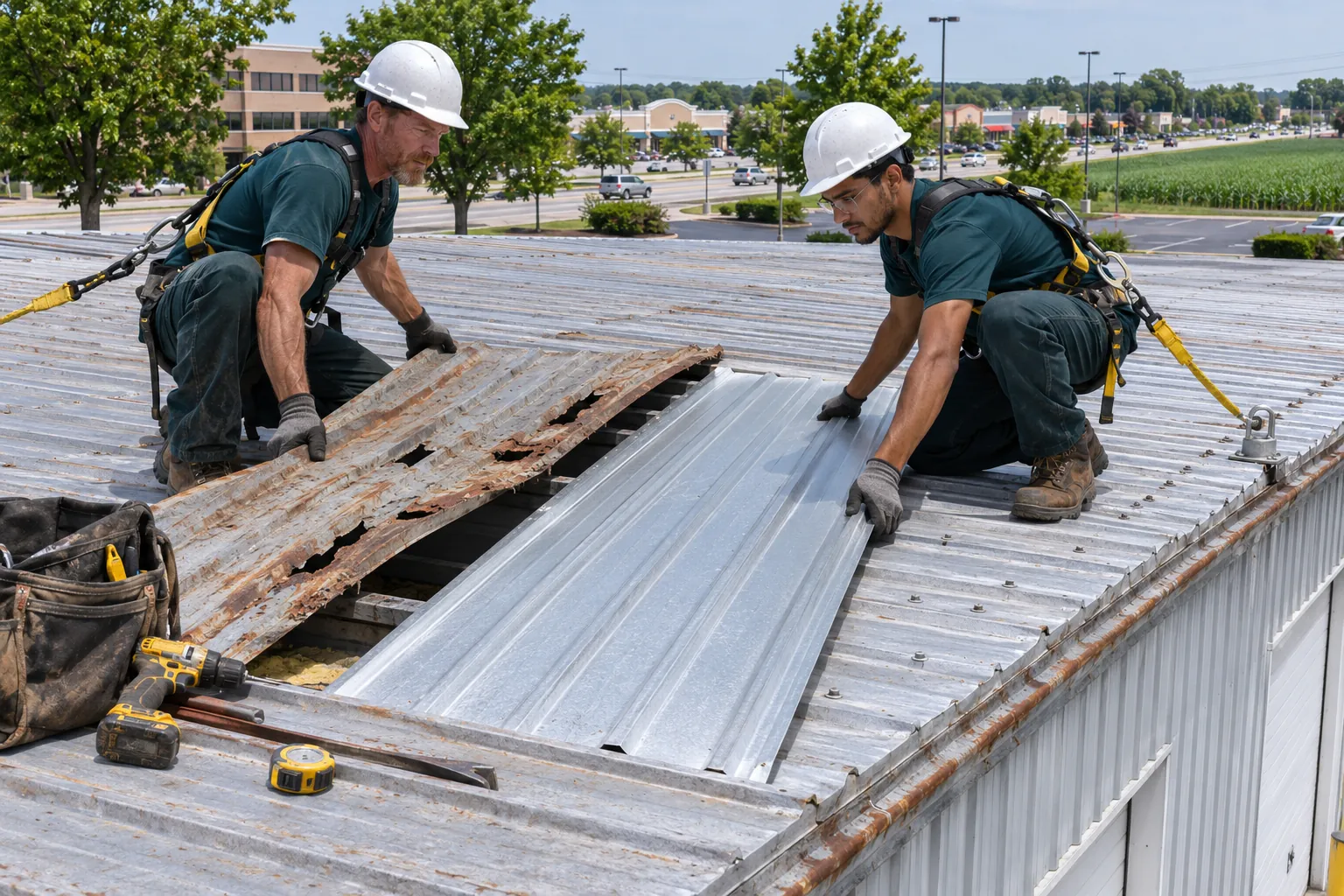
Steel warehouse additions on many plant sites leak at screw rows and laps, which get refastened and resealed.
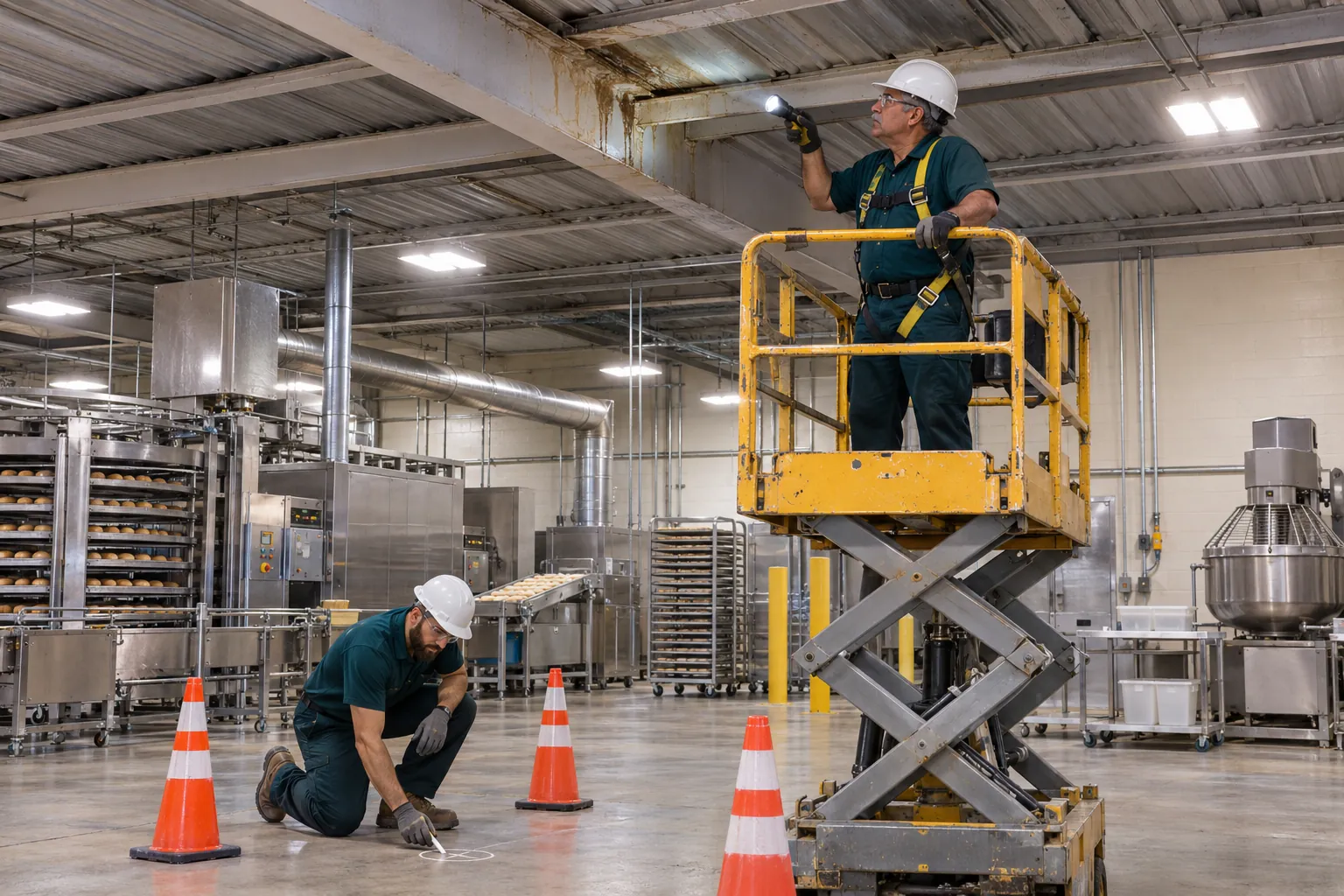
When water reaches the floor far from any fan or joint, a full trace finds the entry point before repairs start.
What facility managers ask before plant roof work starts.
Debris comes out, missing strainers and clamp-ring bolts get replaced, the membrane is reseated under the clamp ring, and cracked bowls are swapped.
Sagging deck around the drain gets corrected too, so water flows into the opening instead of ponding beside it. On large roofs, drain work heads off many of the biggest leaks.
It starts with tracing water across a large roof full of curbs, stacks, and expansion joints.
The failed detail gets repaired in membrane, flashing, or panels, and wet insulation is replaced. Access, safety rules, and timing are agreed with the facility manager before anyone goes up.
Fans shake their curbs loose and can drop grease or chemical residue that softens roofing. The curb flashing gets repaired, the fan base resealed, and residue-damaged membrane cut out and replaced.
A residue-resistant sheet or sacrificial pad around the fan slows the same damage from coming back.
Walks twice a year, in spring and fall, catch most trouble early. Drains and gutters get cleared, seams and flashing checked, curbs and penetrations resealed, and debris and residue removed.
Extra checks after major storms and before winter matter most, since freeze-thaw cycles widen small openings.
Usually, yes. Most plant roof repairs happen entirely from the roof, one zone at a time, and each zone is closed up within the shift.
Work directly over sensitive equipment gets scheduled for breaks or planned downtime, with covers set below if the deck has to be opened.
Share your roof access rules and shutdown windows. We will plan the repairs zone by zone around your production schedule.