A worn track from the hatch to the units
Likely Cause
Daily foot traffic grinds the surface until the membrane cracks along that path.
What We Do
Patch the cracked strip and lay walkway pads along the whole service path.
As a Hobart commercial roof repair contractor, we repair worn walkways, expansion joints, fan curbs, and drains on plants, warehouses, and shops.
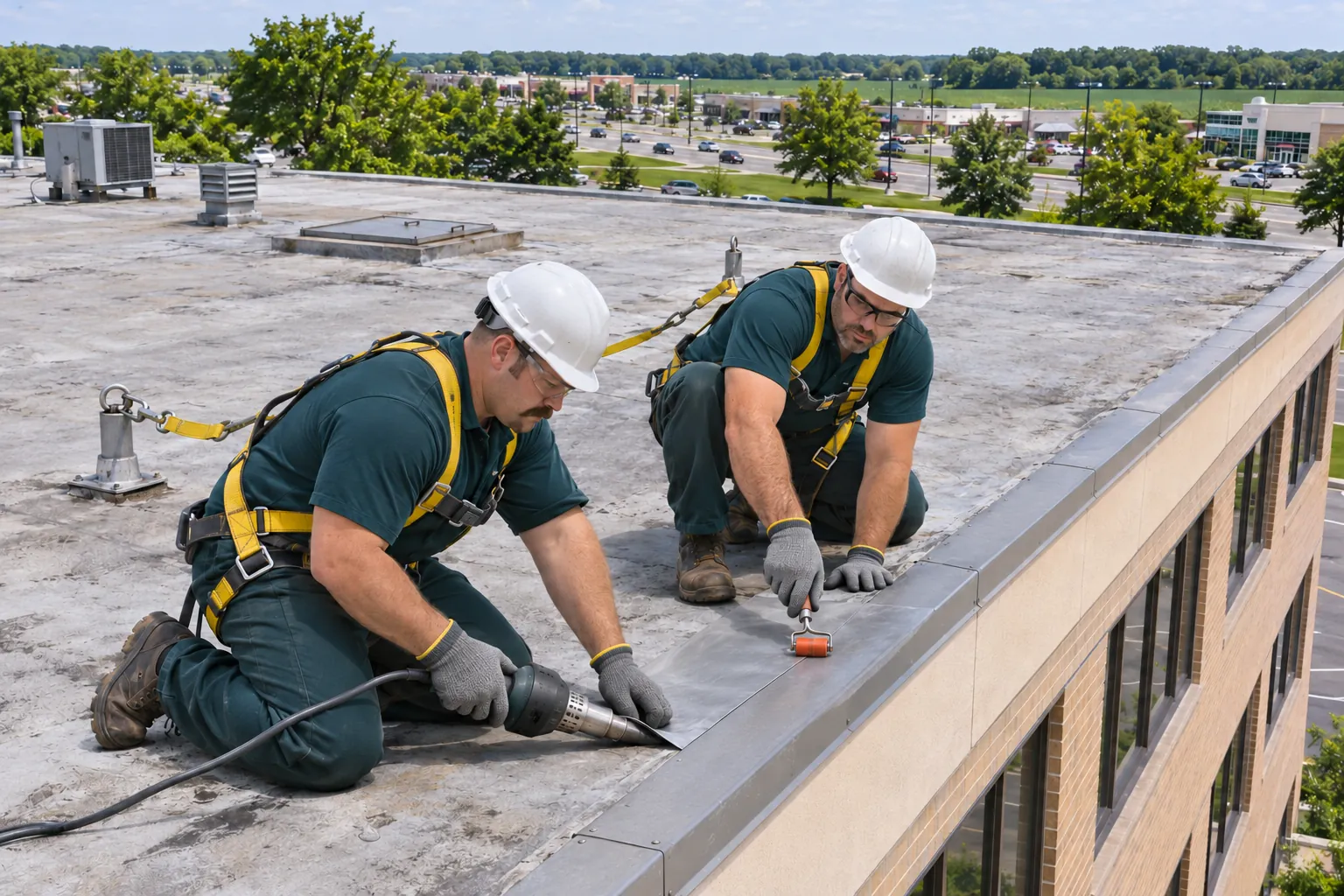
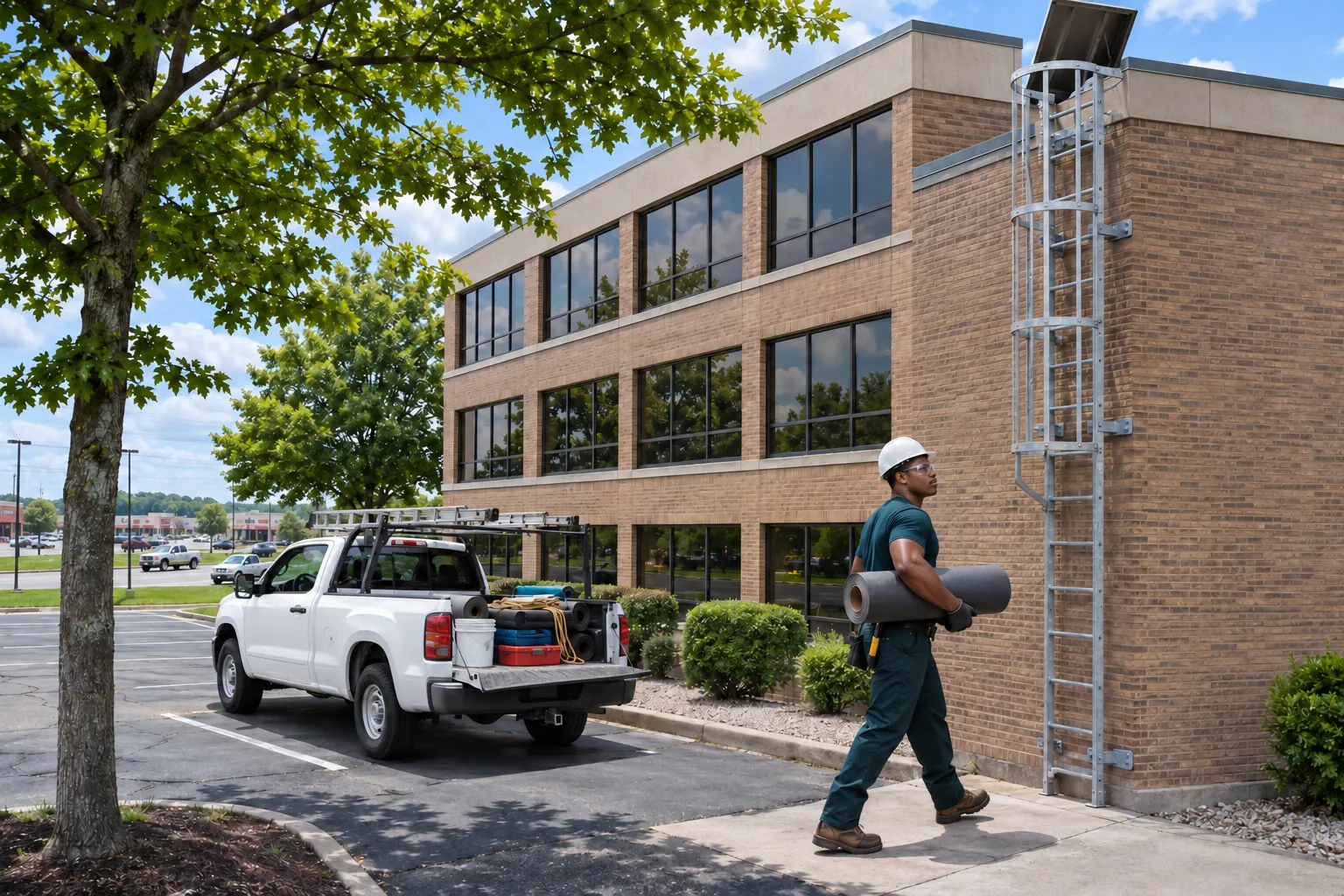
Hobart commercial roof repair on plants starts with the traffic. Service techs cross the same path to every unit, and that path is often where the membrane gives out.
Expansion joint covers loosen as long buildings move with the seasons, and fan curbs shake apart a little more each year.
Repairs get split into zones so each one closes in a single shift and nothing stays open over the line.
Plant roofs wear in patterns. These four show up on almost every walk.
Daily foot traffic grinds the surface until the membrane cracks along that path.
Patch the cracked strip and lay walkway pads along the whole service path.
The expansion joint cover has split or pulled its fasteners as the building moved.
Refasten or replace the cover and flash both edges into the membrane.
Residue from the fan settles on the roof and softens the sheet around the curb.
Replace the softened area with resistant membrane and pad the zone around the fan.
Loading and equipment weight sagged the deck near a drain, so water sits beside the bowl.
Correct the sag, rebuild the drain seal, and add slope toward the opening.
Each repair takes one source of plant roof wear off the list.
Every tech visit widens the crack and lets water under the sheet.
Pads carry the foot traffic so the membrane below stays whole.
Water falls straight through the gap onto the floor below.
New covers flex with the building and stay sealed.
Sheets split around fans and leak into the process area.
Resistant patches hold up where residue lands.
Standing water adds weight to an already low deck.
Leveled areas and rebuilt drains move water off.
These services cover the plants, warehouses, and shops across Hobart.
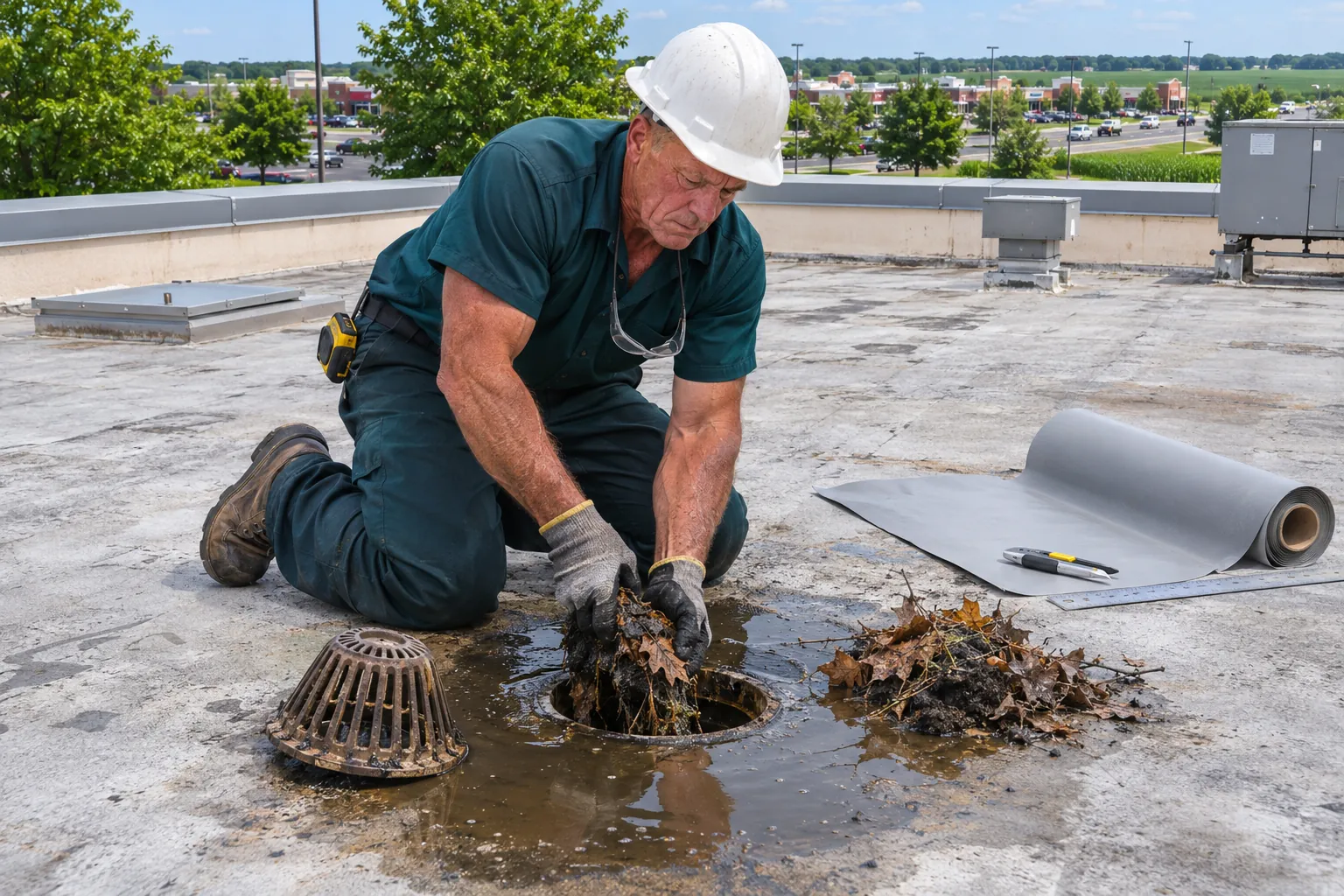
Office wings and flat warehouse sections get seam patches, drain rebuilds, and wet insulation replaced where water got in.
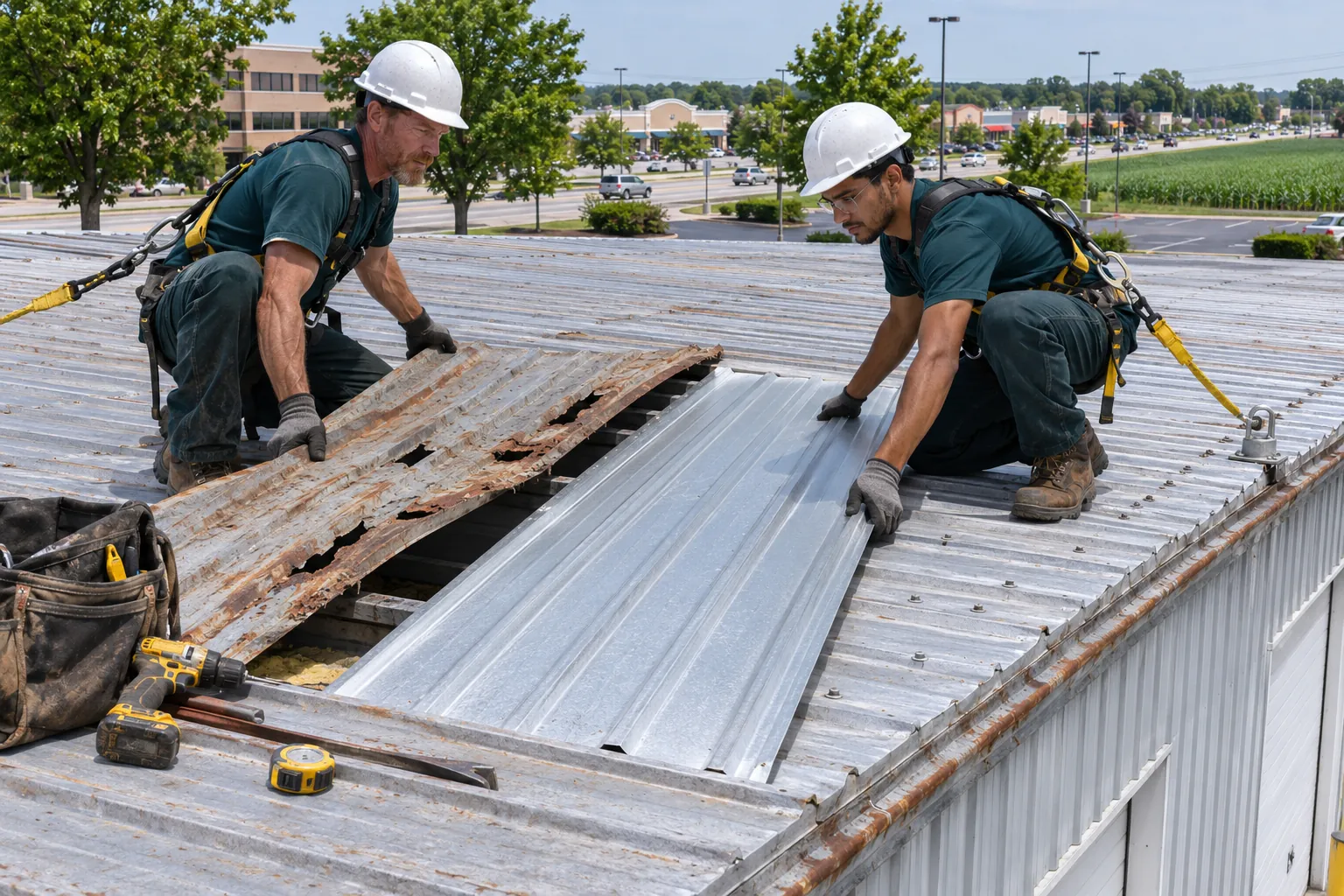
Steel shops and storage buildings get fastener runs replaced, laps resealed, and rusted panels swapped for matching ones.
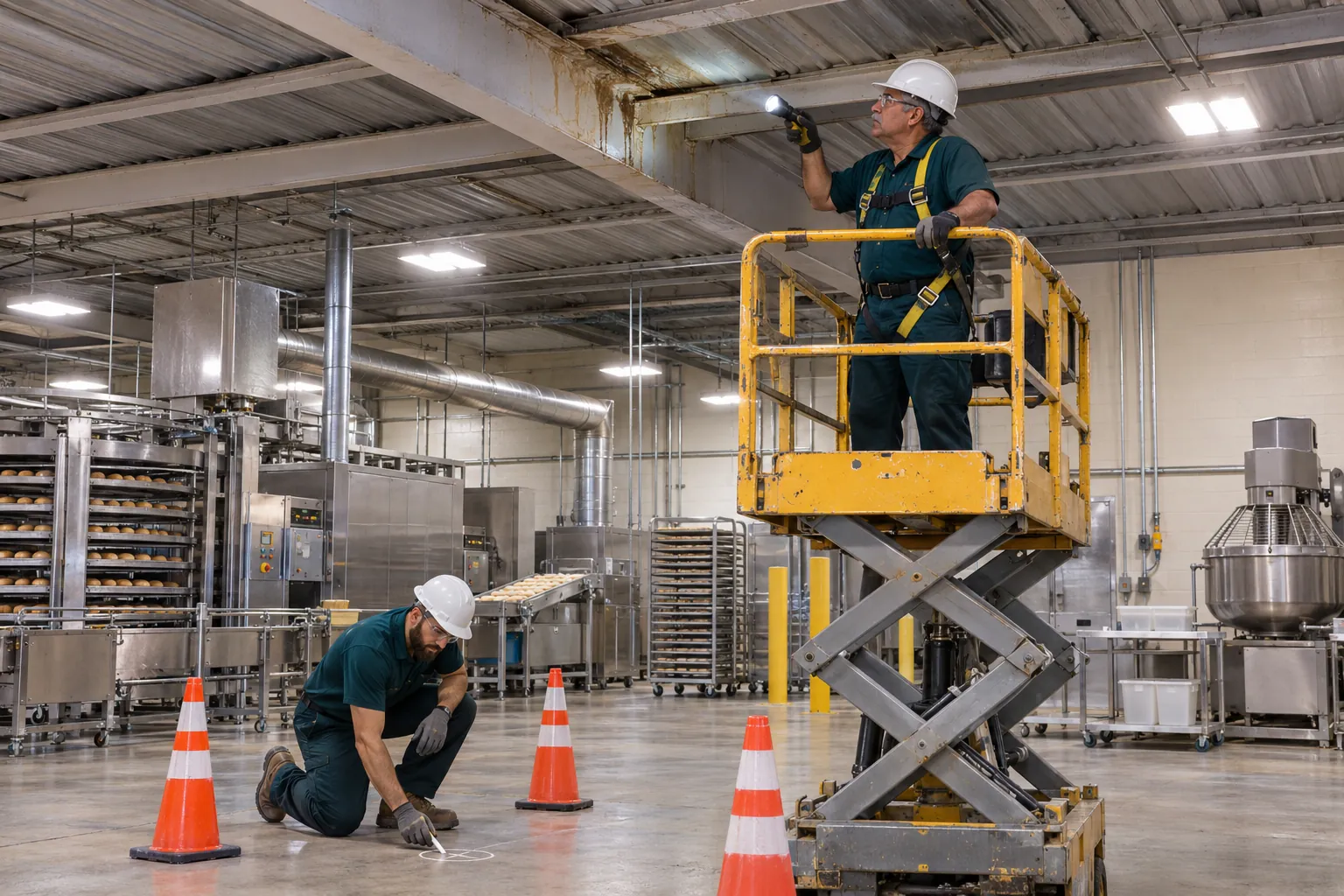
Water that reaches a floor far from any joint or fan gets traced across the deck to its real entry point.
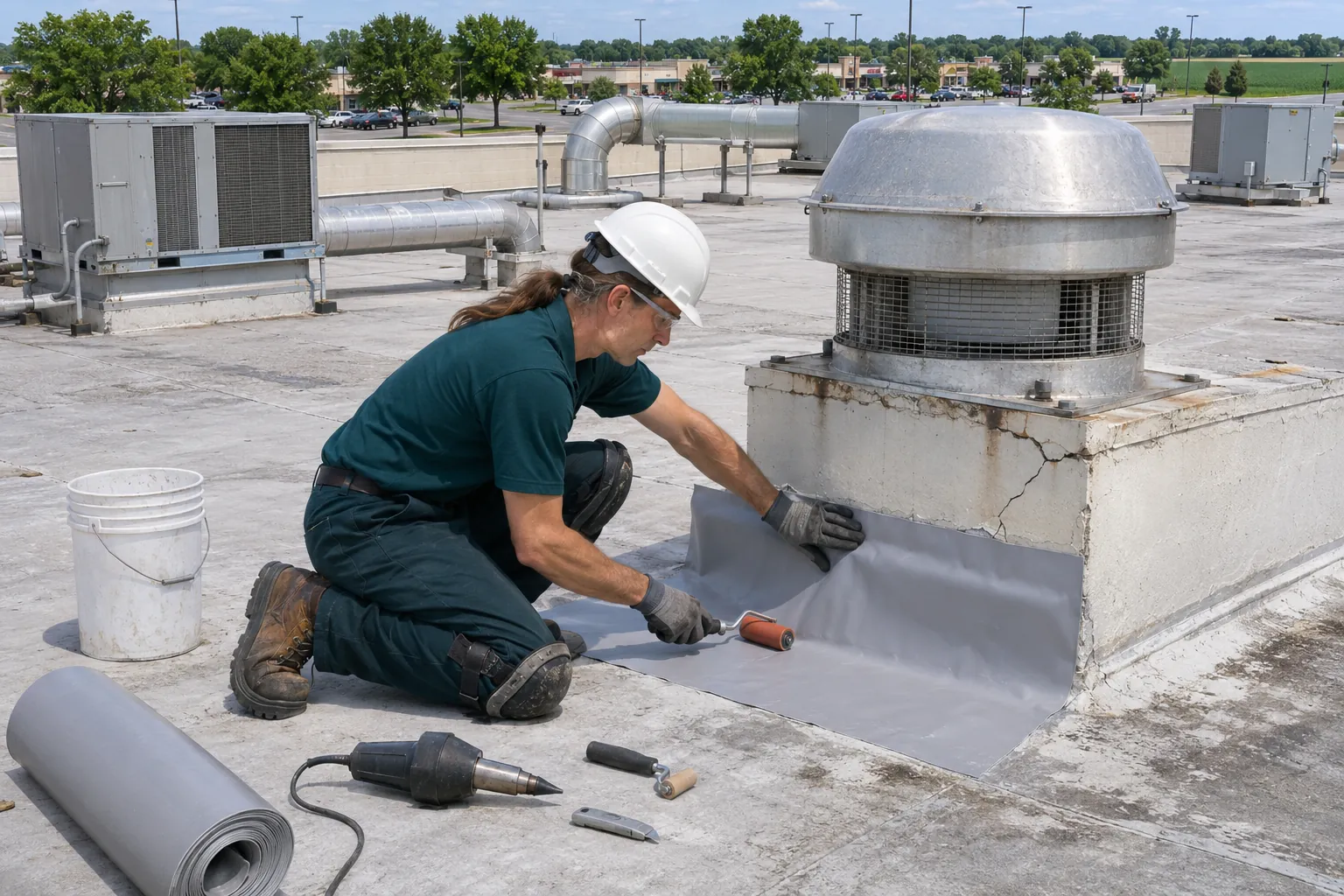
Fans, expansion joints, walkways, and drains on plant roofs get repaired zone by zone around production.
Water over equipment or stock needs to stop first. A call gets the opening covered and the zone mapped for a planned repair.
Call UsSend the address and your quiet hours. We will lay out the repairs zone by zone so each one closes in a shift.
Send roof details for an estimateWalkways, joints, fans, and drains get walked in zones and marked on a sketch the facility manager keeps.
Hot-work limits, roof access, safety gear, and quiet hours get settled before any material goes up.
Zones over lines, stock, or electrical rooms get repaired ahead of open warehouse areas.
Every opened area is patched, flashed, and sealed before the crew leaves the roof.
Walkway pads go down along service routes last, so new repairs are protected from the next visit.
We repair commercial roofs in Hobart, Merrillville, and four other Lake County towns. Outside them? Please call us or send us a message.
What Hobart facility managers ask before plant roof work starts.
Plants, warehouses, and shops in Hobart are a big part of this work. Leak repairs there usually involve drains, exhaust fan curbs, expansion joints, and paths worn by foot traffic. Work is scheduled around operations, and wet insulation gets replaced so the leak stays fixed.
Cracked or worn membrane along the service route gets cut back and patched, then walkway pads are adhered or welded down from the hatch to each unit. The pads take the boots and carts, so the patched membrane underneath is not ground down again.
The cover gets checked along its length. Loose sections are refastened, split sections replaced, and both edges flashed into the roof membrane. The new cover is set to move with the building so it does not tear at the next temperature swing.
Most can. Work happens from the roof in zones that close within one shift. Areas directly over sensitive equipment get scheduled for breaks or downtime, with covers placed below if the deck has to be opened.
Spring and fall walks catch most problems, with extra checks after big storms. Plant roofs with heavy foot traffic or many fans benefit from a quick look after major service work on the equipment.
Share your access rules and quiet hours. We will map the worn paths, joints, and fans and plan the repairs by zone.