A soft spot that gives underfoot
Likely Cause
Water has rotted the wood deck below the membrane after years of slow leaking.
What We Do
Cut out the soft decking, replace it, and rebuild insulation and membrane over it.

As a Cedar Lake commercial roof repair contractor, we fix leaks on business flat roofs and metal pole buildings and replace wet insulation around them.
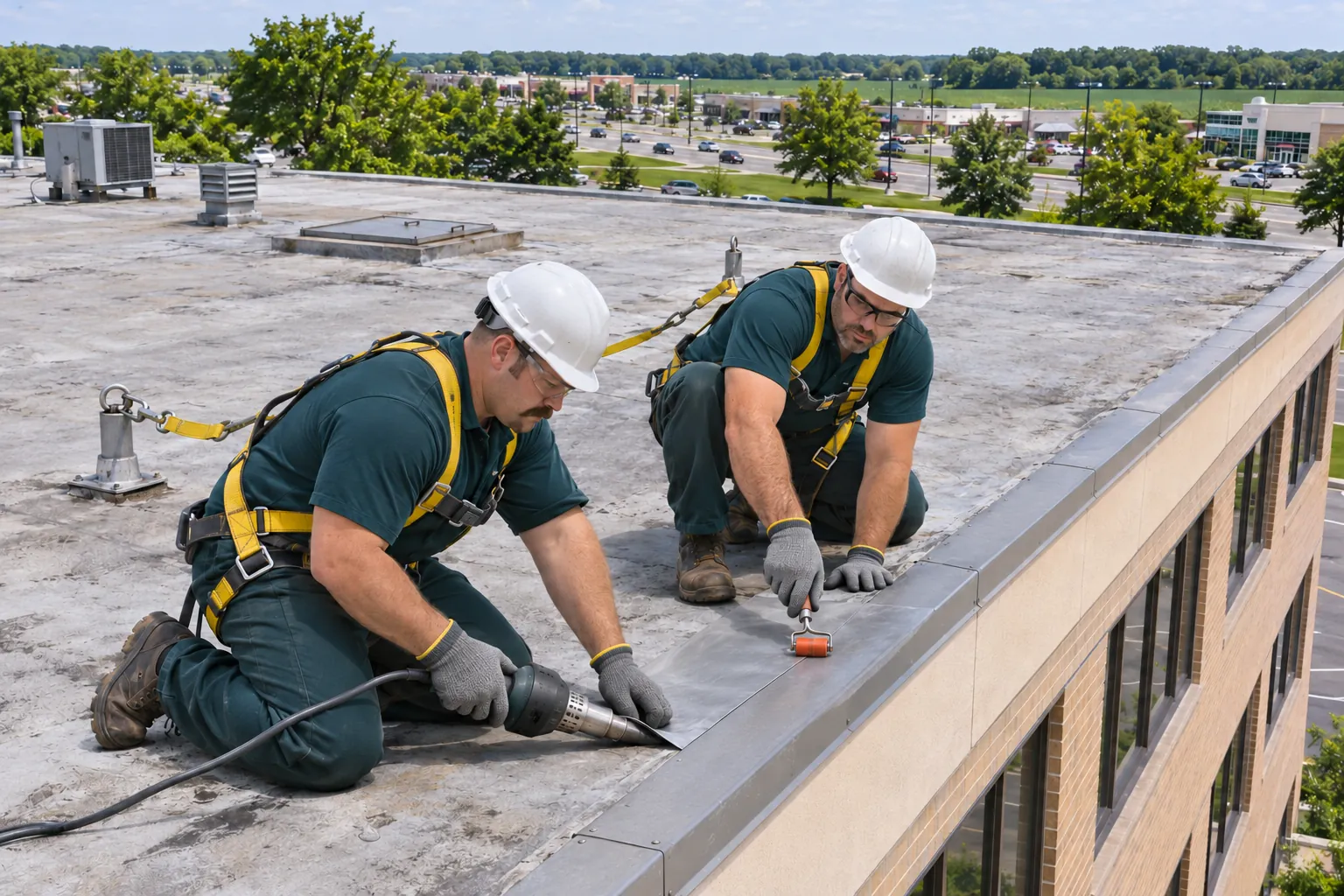
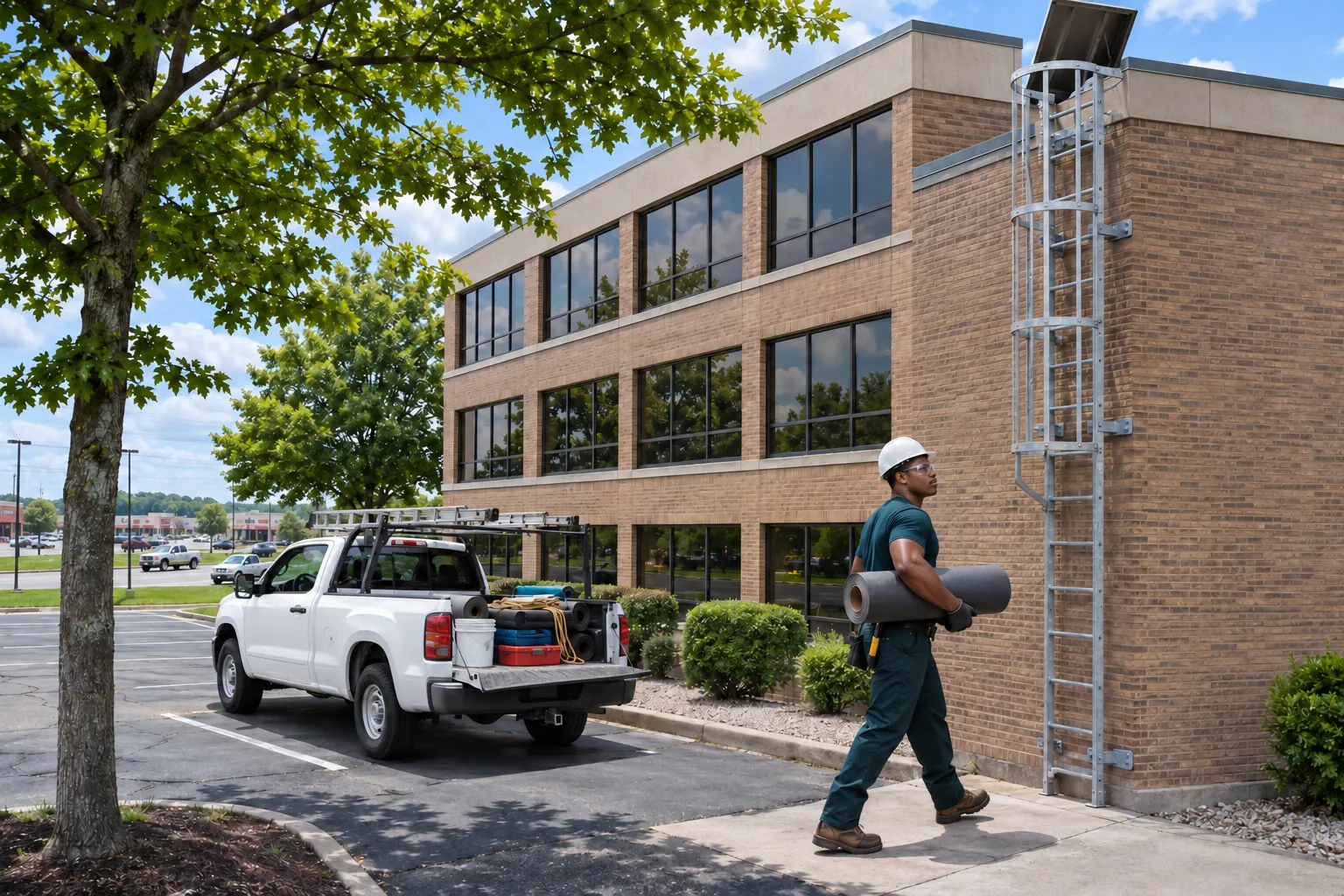
Cedar Lake commercial roof repair often finds more than one leak. Small buildings go years with a slow drip, and the water soaks insulation and wood long before a stain shows.
On flat roofs, that means wet boards and soft decking near the source. On pole buildings, it means rot at purlins and girts under the leaking lap.
Every repair here includes probing around the source so the patch does not sit on top of wet or rotten material.
Older, slower leaks leave signs inside and on the roof. These four point to hidden damage.
Water has rotted the wood deck below the membrane after years of slow leaking.
Cut out the soft decking, replace it, and rebuild insulation and membrane over it.
Insulation above the ceiling has stayed wet long enough to hold moisture year round.
Find the wet edge with readings, remove the soaked boards, and seal the source.
A leaking lap or ridge sends water down inside the wall panels, rusting the fasteners.
Reseal the lap or ridge above and replace rusted screws along the wall.
The earlier patch sealed the drip point while the real opening kept leaking a few feet away.
Trace past the old patch to the true source and repair it in matching material.
Repairing the source and the damage around it ends the slow leak for good.
Soft wood sags, holds water, and lets fasteners pull loose.
New decking gives the patch a solid base.
Wet boards keep the ceiling damp and smelling.
Dry, new boards replace every soaked section.
Water runs into the walls and rusts girts and screws.
Resealed laps keep water on the outside of the panels.
The leak keeps going beside the patch that missed it.
A traced repair lands on the opening itself.
These four services cover the small business roofs and metal buildings in Cedar Lake.
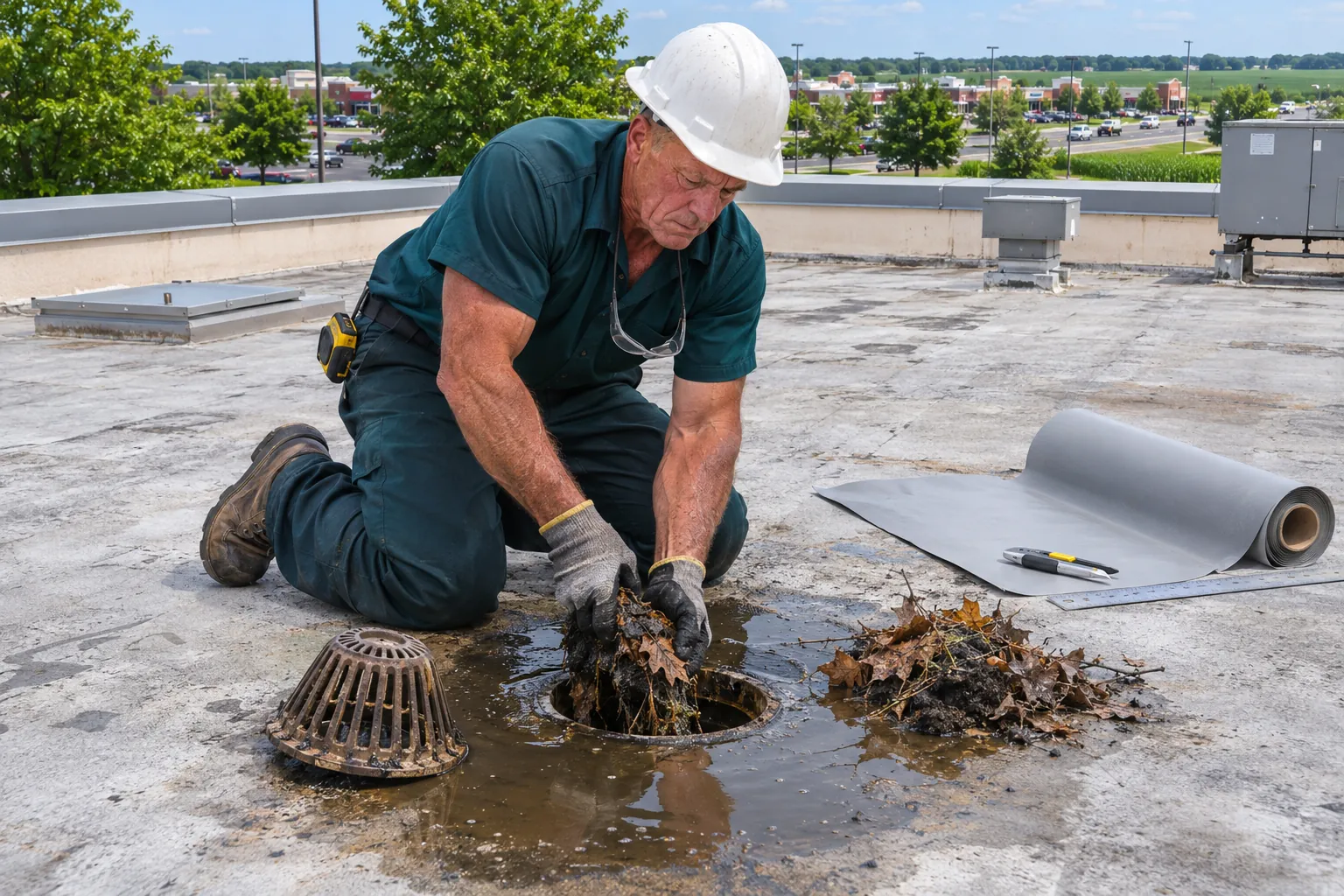
Flat roofs on shops and offices get seam patches and drain fixes, with wet insulation and soft decking replaced under them.
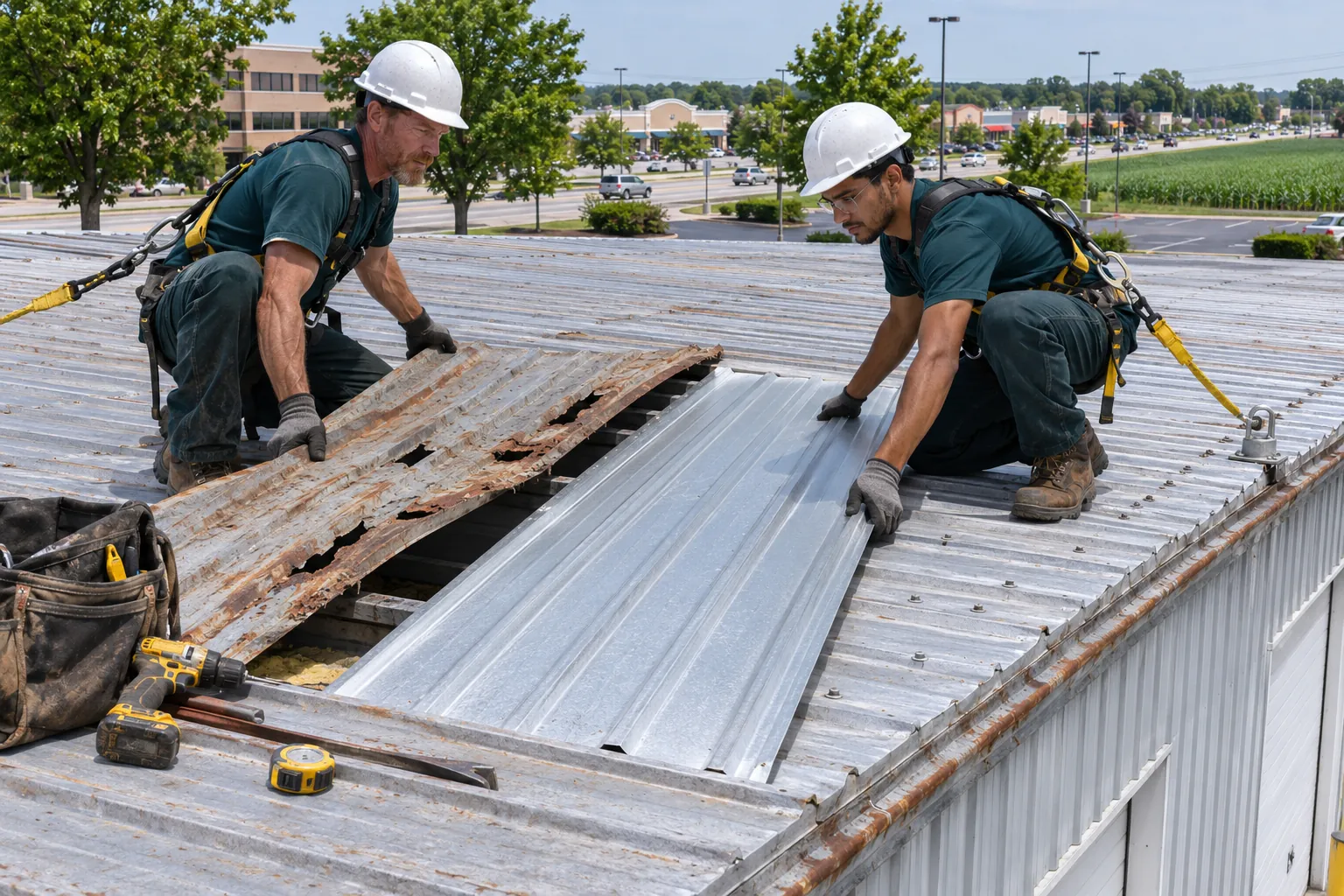
Pole buildings and steel shops get laps, ridge caps, and screws resealed, with rotted purlins checked under each leak.
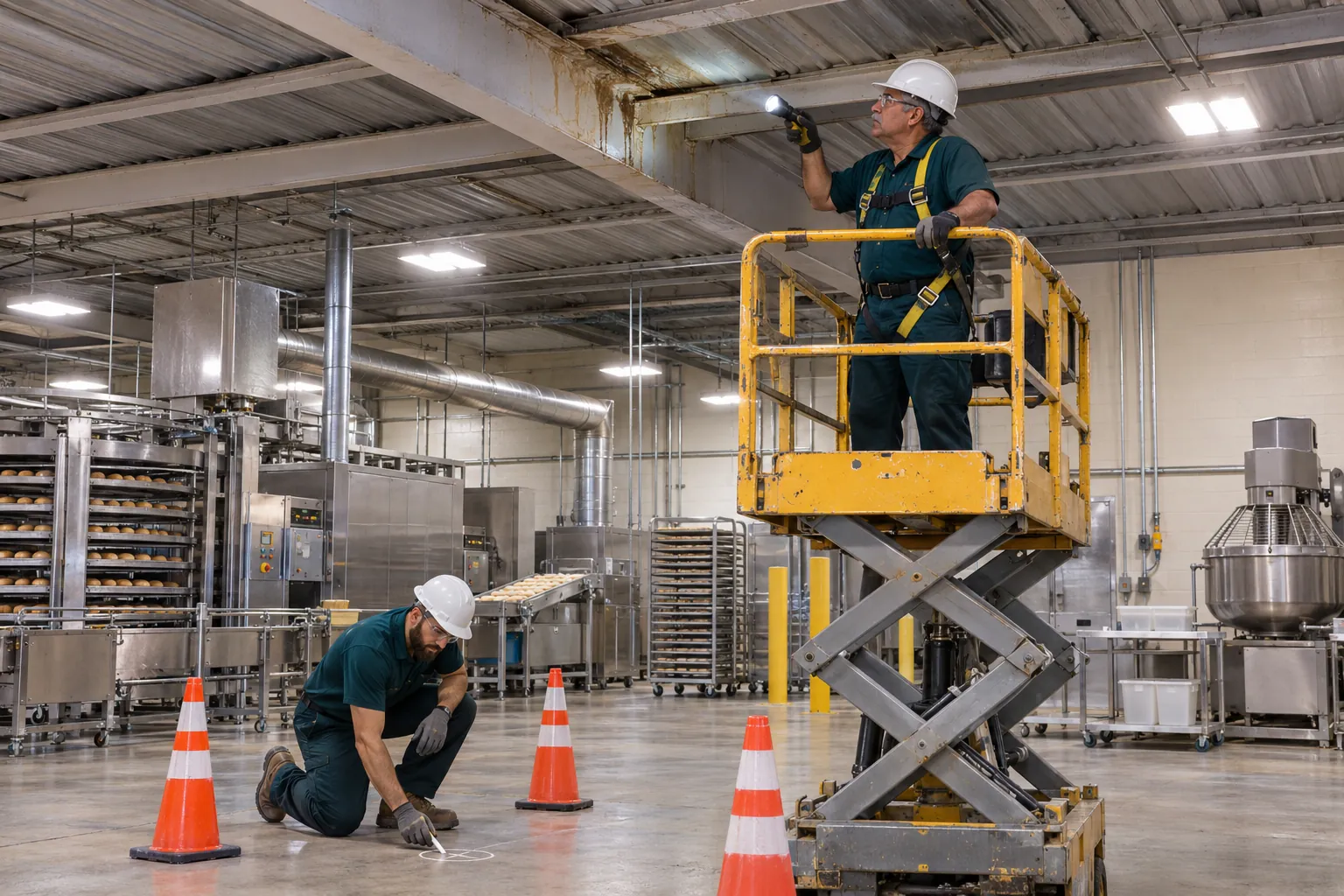
Slow leaks that soaked insulation before anyone noticed get traced past old patches to the true source.
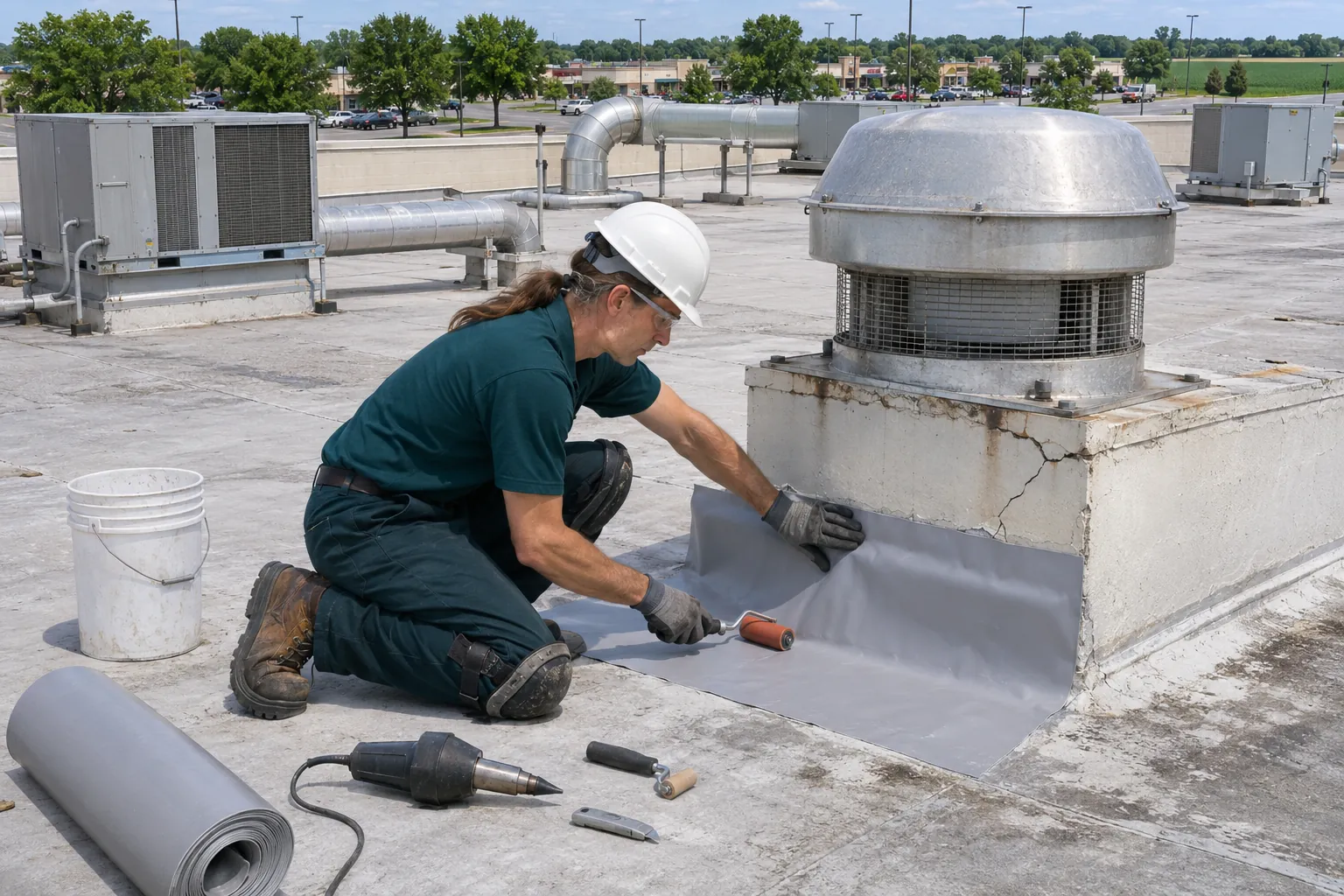
Larger shop and storage buildings with equipment on the roof get curb and drain repairs planned around work hours.
A stain that returns beside an old patch usually means the patch missed. A call gets the trace started at the stain.
Call UsSend the address and what you know about past leaks. We will check for wet insulation and soft wood before listing repairs.
Send roof details for an estimateEarlier patches, stains, and soft spots get mapped, since a slow leak often has more than one entry.
Moisture readings and probes show how far wet boards and soft decking spread from each source.
Soaked insulation and rotted deck or purlin sections come out down to dry, firm material.
New decking, insulation, and a matched patch or resealed lap close the roof over the repaired area.
The interior gets checked after the next storm, and photos of each repair go to the owner.
We repair commercial roofs in Cedar Lake, Merrillville, and the towns below. Your building is somewhere else? Please call us or send us a message.
What Cedar Lake business and building owners ask about slow leaks.
Yes. Commercial roof leaks in Cedar Lake get found and repaired, from flat roofs on businesses to metal roofs on shops and pole buildings.
The work locates the source, repairs the failed seam, fastener, or flashing, and checks for wet insulation or rot around the leak.
Laps and ridge caps get resealed, worn screws replaced with oversized fasteners and new washers, and rusted panels swapped. Purlins and girts under each leak get probed for rot, and soft wood is replaced before the panel goes back on.
Any insulation that stays wet after the leak is sealed needs to come out. Wet boards lose their insulating value, hold water against the deck, and keep the ceiling damp. Moisture readings show the edge of the wet area so only those boards get replaced.
Patches placed right over the drip often miss the real opening, because water travels along the deck or a purlin before it falls. A trace that starts at the stain and works uphill finds where it actually enters.
Usually, if the rot is limited to the area around one or two leaks. The soft section gets cut out and replaced, then insulation and membrane are rebuilt over it. Rot spread across much of the roof points to replacement instead.
Send us where the old stains and soft spots are. We will find each source and the damage hiding around it.