Patch And Rebuild
Repair The Flat Roof
- Membrane
- Flexible, still lies flat at walls
- Insulation
- Dry beyond the leak area
- Leak Pattern
- One or two spots, traceable
- Drains
- Clear, or fixable at the bowl
- Next Step
- Cut out, patch, reflash

As a Merrillville flat roof repair contractor, we patch seams, rebuild drains, and cut out wet insulation on membrane and built-up commercial roofs.
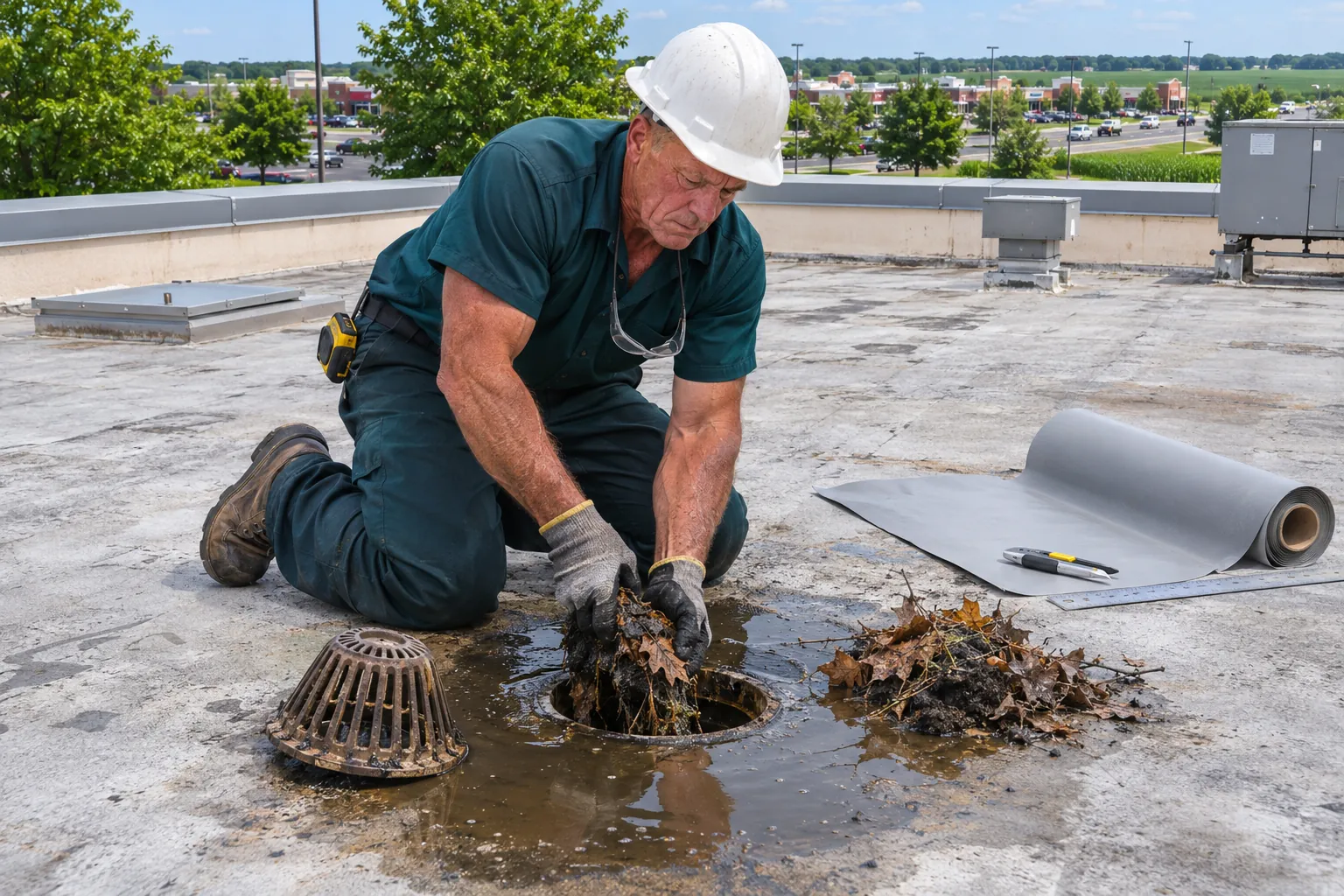
Merrillville flat roof repair fits when damage stays local and the insulation around it is dry. These two cards show where a patch ends and a new roof begins.
Each sign below points to a different part of a flat roof. Matching the sign to its cause keeps the repair on the detail that failed.
Clogged strainers, a sagging deck, or insulation crushed by foot traffic leaves a low ring where water sits.
Clear the drain, replace crushed boards, and add tapered pieces so the low spot sheds toward the bowl.
Lap seams open as membrane shrinks with age and cold; adhesive lets go first at corners and T-joints.
Clean back to sound membrane and heat-weld or tape a patch that laps past the opening on every side.
Water already sits in the insulation below the membrane and spreads a little further each freeze.
Core-cut to find the wet edge, remove that insulation, and patch over new boards of the same thickness.
Base flashing at the parapet has pulled loose or the coping joints above it have opened.
Refasten and reseal the base flashing, then seal coping joints so water stops running down behind it.
The method follows the membrane already on the roof, so a patch ages at the same rate as the field around it.
Thermoplastic sheets fuse to the old membrane with hot air once the surface is scrubbed clean, so the patch becomes part of the roof.
Rubber roofs take primed seam tape and cover strips, rolled tight so no air channels run under the edge.
Torch-free cold adhesive and cap sheet go over cut-out blisters, with granules matched to the surface.
A new clamp ring, bolts, and a membrane target sheet seal the bowl so water drains instead of slipping under the edge.
Every failure below has a matching repair. Fixing the cause keeps the next storm from opening the same spot.
Ponds add weight to the deck and wear the membrane faster in the low spot.
Drains run free and tapered fill moves water off the low ring.
Rain and snowmelt work under a loose lap and into the insulation beneath it.
Welded or taped patches close the lap past its weak edge.
Soaked boards lose their grip on the deck and keep feeding the leak below.
Wet boards come out and dry, same-thickness boards go in.
Wind lifts the flashing and water runs behind it down the inside of the wall.
Flashing gets refastened, sealed, and termination-barred at the top.
Standing water near a blocked drain keeps pressing on seams and flashing. A call gets the strainer cleared and the leak covered before the next storm.
Call UsSend the address and a note on the leak spots, and we will set a time to walk the roof while patches can still adhere in mild weather.
Send roof details for an estimateStrainers, scuppers, and low spots get checked first, since a slow drain is behind many flat roof leaks after heavy rain.
Moisture readings and a core cut show how far water has spread into the insulation around the leak.
Blistered membrane and soaked boards are removed back to dry, firm material before anything new goes down.
New insulation, a matched membrane patch, and fresh flashing at curbs or walls close the opening.
Seams get probed, the drain gets a water test, and photos of the finished patch go to the owner.
Some flat roofs share a building with metal sections or crowded equipment areas. These repairs cover those parts.
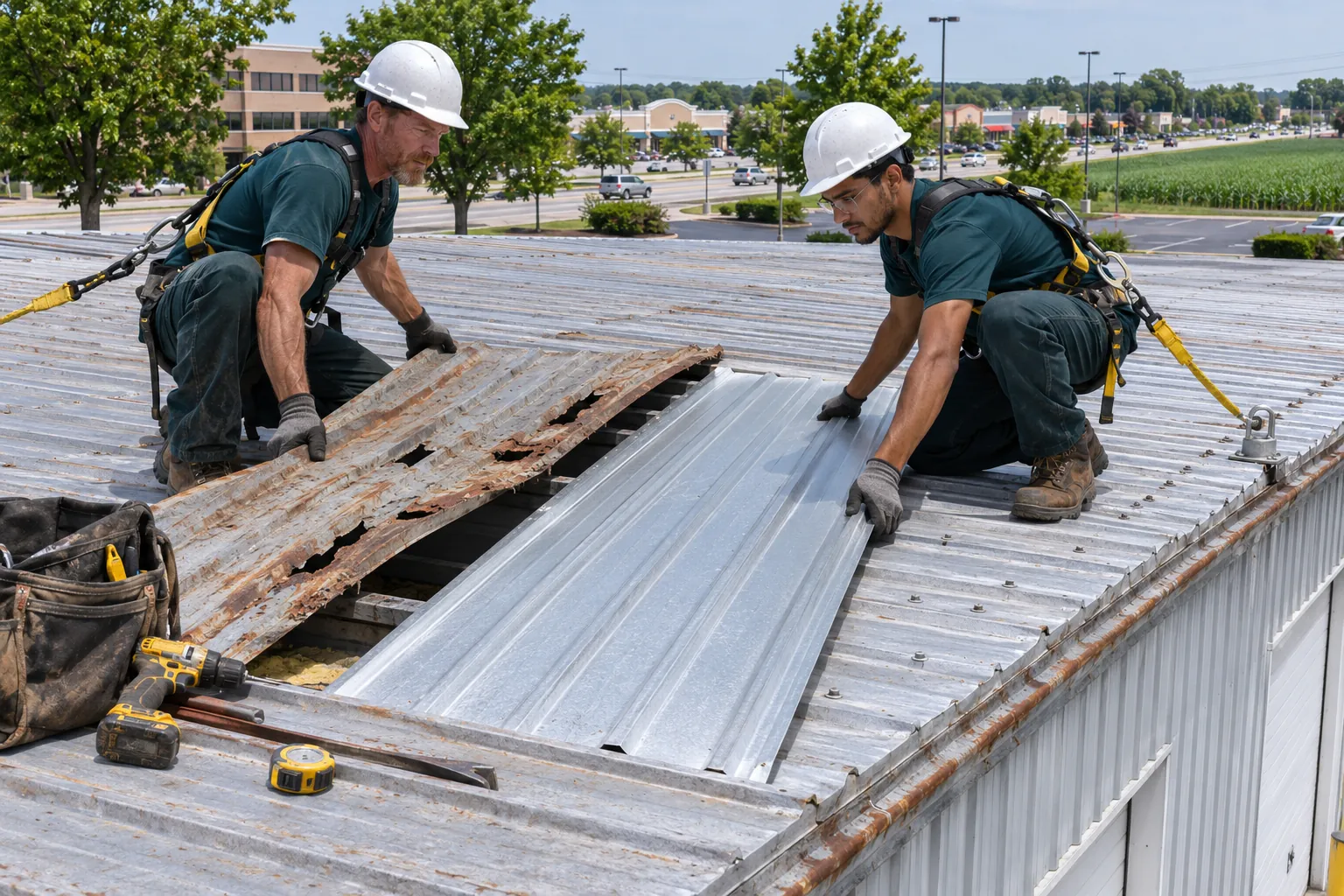
Additions and canopies on many flat-roof buildings are steel. Screw lines and laps on those sections leak differently and get refastened rather than patched.
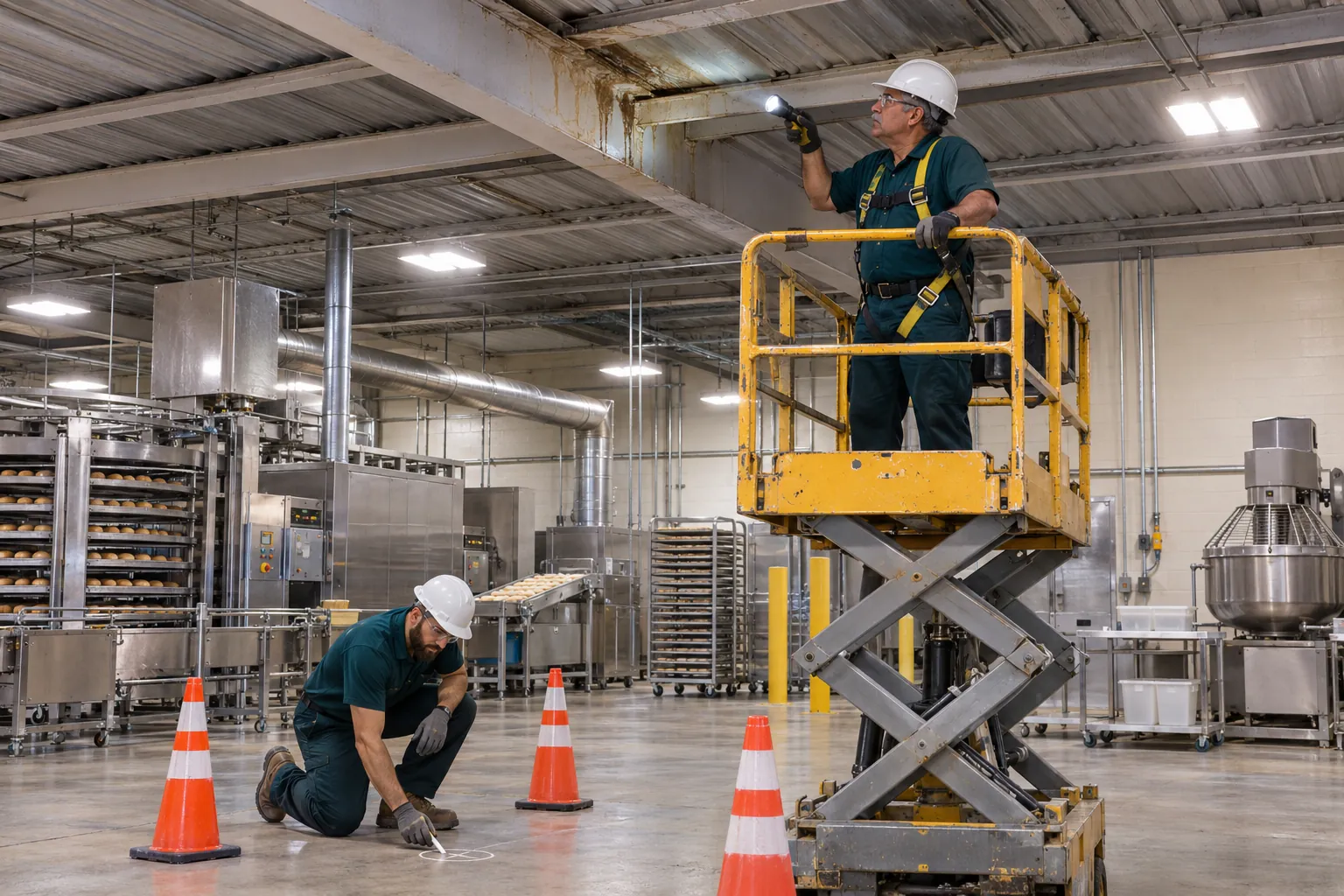
When a ceiling stain sits far from any obvious seam, leak tracing follows the deck flutes back to the true source before a patch goes on.
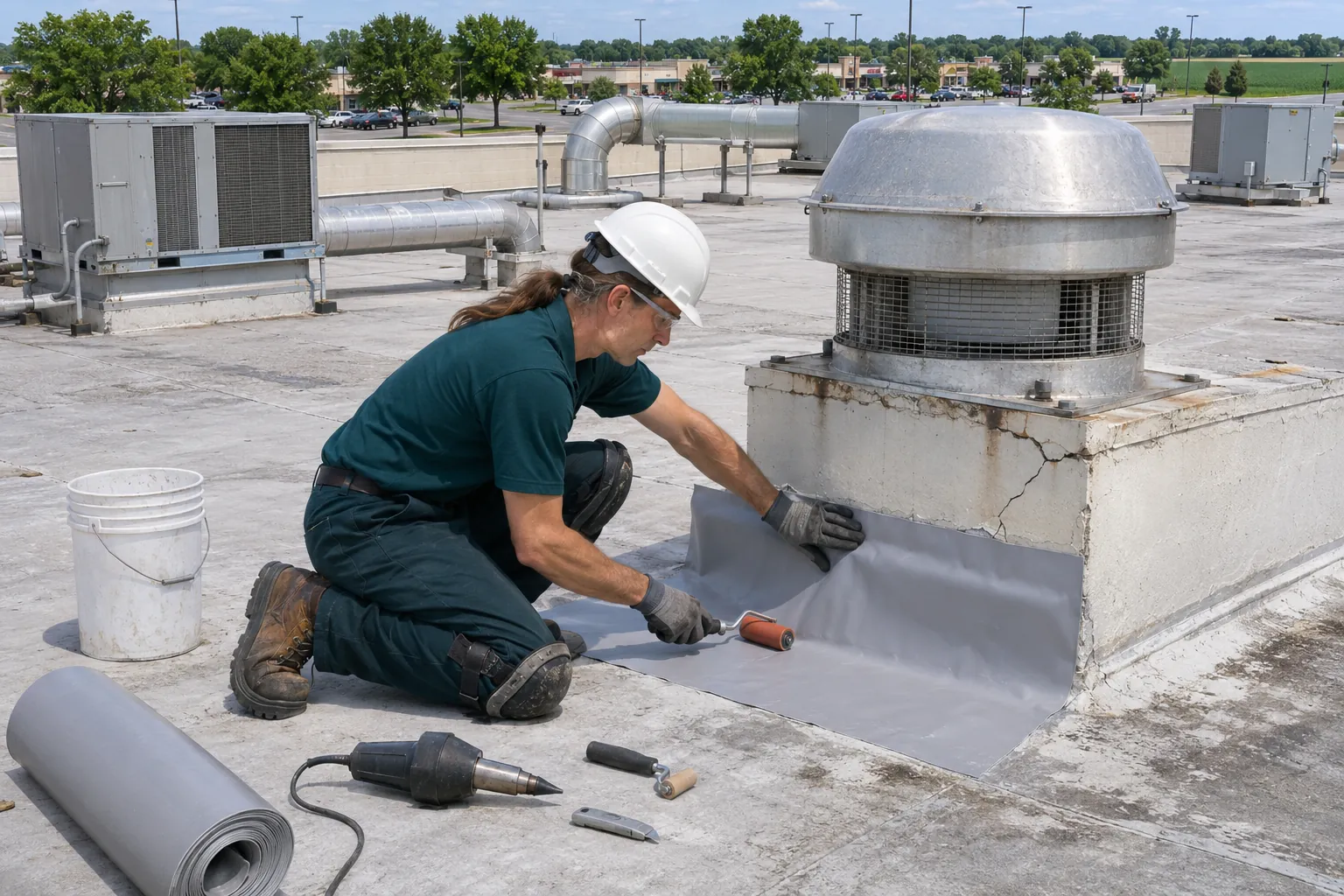
Plant roofs carry fans and stacks that shed residue. That membrane needs a different patch material than a clean office roof.
Short answers to what owners ask before a flat roof crew climbs up.
Yes, with the right materials. Snow and ice come off the area first, the surface gets dried, and cold-rated tapes, sealants, or fastened patches go down.
When temperatures are too low for a full bond, the winter patch stops the water and a permanent patch follows in spring.
Heavy rain lifts the water level on a flat roof faster than slow drains can empty it. Once water climbs past short flashing, an open seam, or a loose penetration, it gets inside.
We check how fast each drain empties, how tall the flashing stands, and the seams closest to the drip.
Finding why water sits comes before any patch: a plugged drain, a sagging deck section, crushed insulation, or too little slope.
Drains get cleared and rebuilt, crushed boards replaced, and tapered insulation or small crickets added to steer water toward the bowls, which also takes standing weight off the deck.
A patch fits a puncture, one failed seam, or a small damaged area surrounded by dry insulation.
Replacement makes sense when patches keep failing, wet insulation runs across large sections, or the membrane has gone stiff. A moisture survey across the roof tells you which side of that line you are on.
Deep lake-effect snow melts slowly into drains, parapet corners, and low spots, then refreezes overnight. Each cycle pushes water a little further into seams and flashing. After a heavy snow we check those corners and drains and reseal any opening before the next storm arrives.
Tell us where the water shows up and when. We will walk the drains and seams and write down the repair the roof needs.