Fix The Failed Details
Repair The Roof
- Leak Count
- One area or a few traceable spots
- Insulation
- Dry beyond the leak
- Membrane Or Panels
- Flexible, still holding at walls
- Past Patches
- Holding up
- What We Recommend
- Repair and reflash
As a Merrillville commercial roof repair contractor, we find leaks and repair flat, metal, and industrial roofs on retail centers, offices, and warehouses.
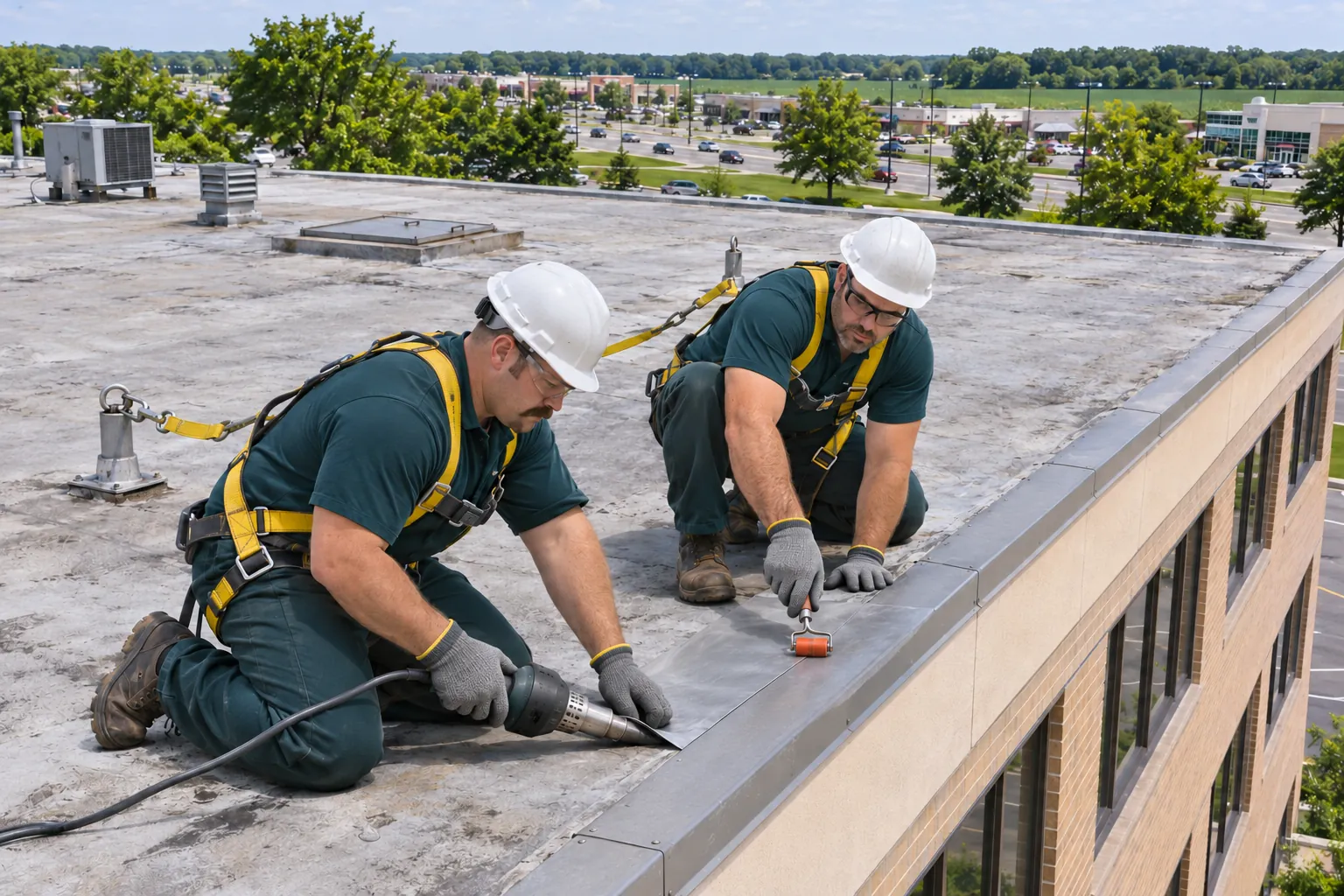
Merrillville commercial roof repair fits most roofs with a few leaks and dry insulation. A moisture check shows which card your roof matches before any money is spent.
Owners usually call about what they see inside. Each sign below points to a likely cause on the roof and the repair that fixes it.
Water enters uphill at a curb, seam, or skylight and runs along the deck before it drips.
Trace the water from the stain uphill, confirm the source, and rebuild that detail.
Leaves in the strainer or a sagging deck keep the drain from taking water after rain.
Clear and rebuild the drain, replace crushed insulation, and add slope toward it.
Rubber washers on the screws have cracked, and daily panel movement has backed the screws out.
Replace the screw run with oversized fasteners and new washers, then reseal the laps nearby.
Vibration loosened the curb flashing and residue from the fan softened the membrane around it.
Reflash the curb, cut out softened membrane, and add a resistant pad around the fan.
Snowmelt refreezes at cold edges and drains, then backs up under laps and flashing.
Clear the ice dam, reseal the laps it reached, and check the insulation for heat loss.
Four repair services cover the roofs on most commercial buildings in town. Each one matches material to the roof already in place.
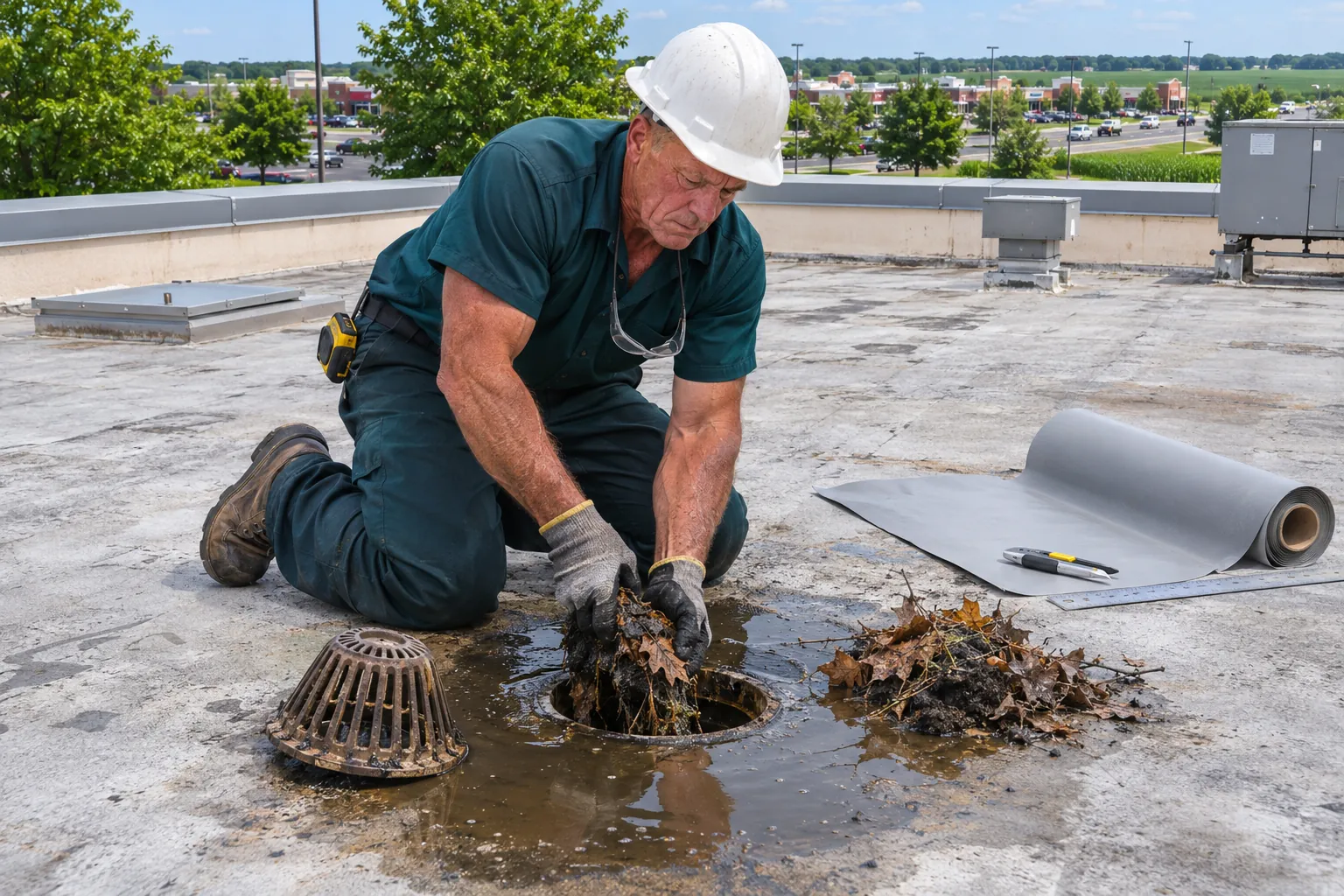
Built-up, modified bitumen, TPO, and EPDM roofs on retail centers and office blocks. Open seams, blistered laps, clogged drains, and wet spots get cut out and patched with membrane that matches the roof.
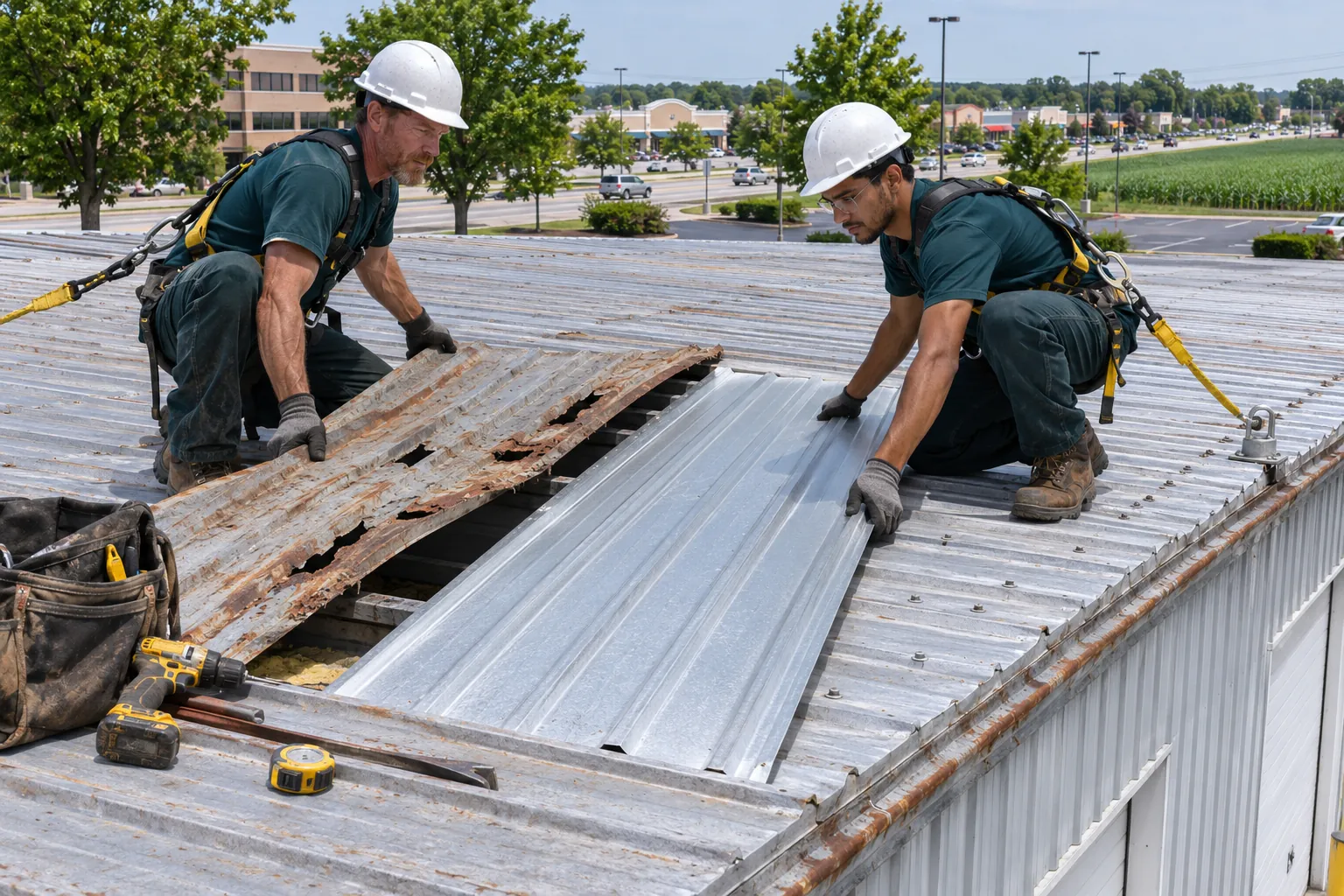
Ribbed and standing-seam steel roofs on shops, warehouses, and storage buildings. Backed-out screws, cracked washers, rusted-through panel ends, and open side laps are the usual leak points we replace and reseal.
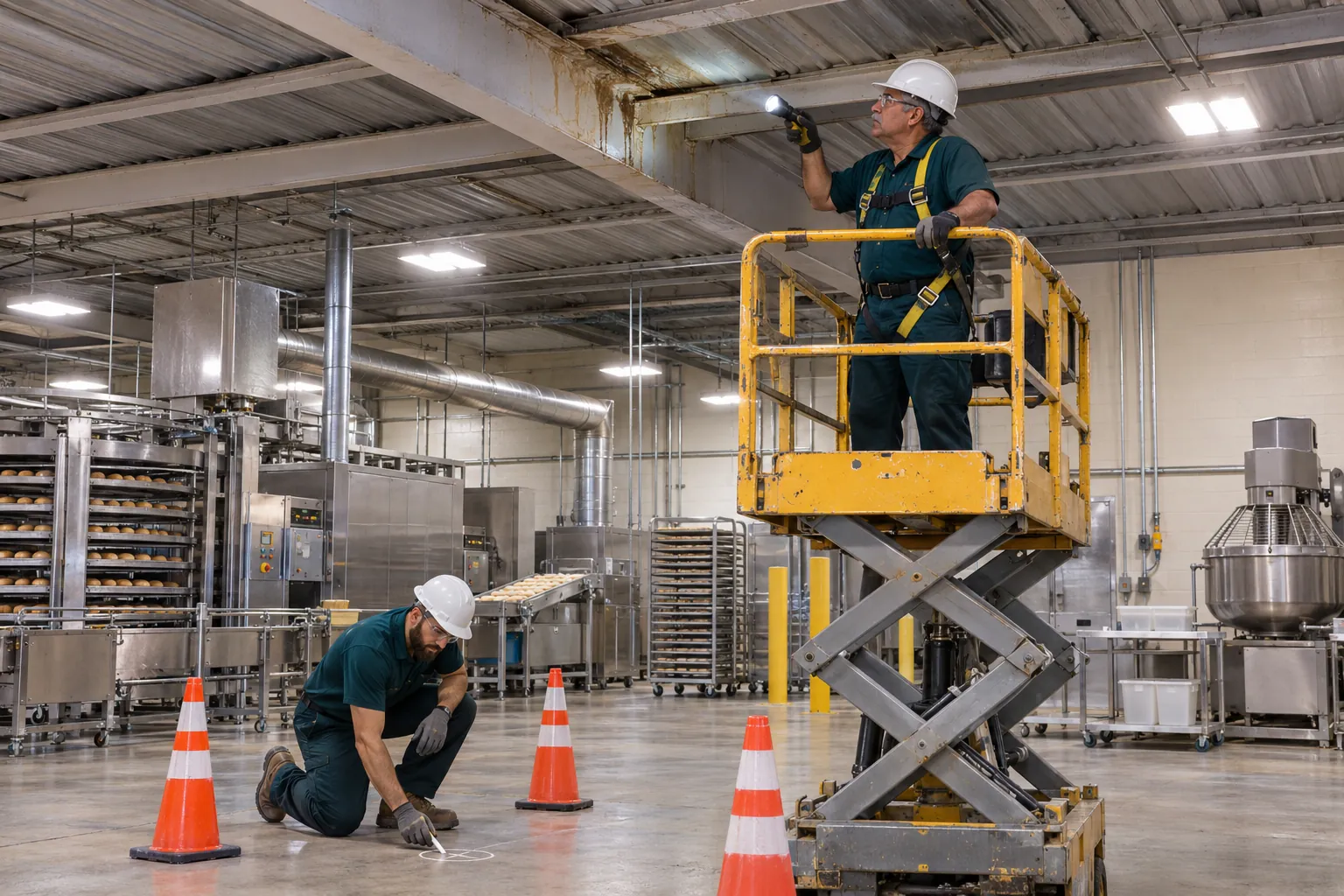
A ceiling stain, a drip over a rack, or water at a wall that keeps coming back. Tracing starts inside, follows the water uphill along the deck, and ends at the failed curb, seam, or flashing.
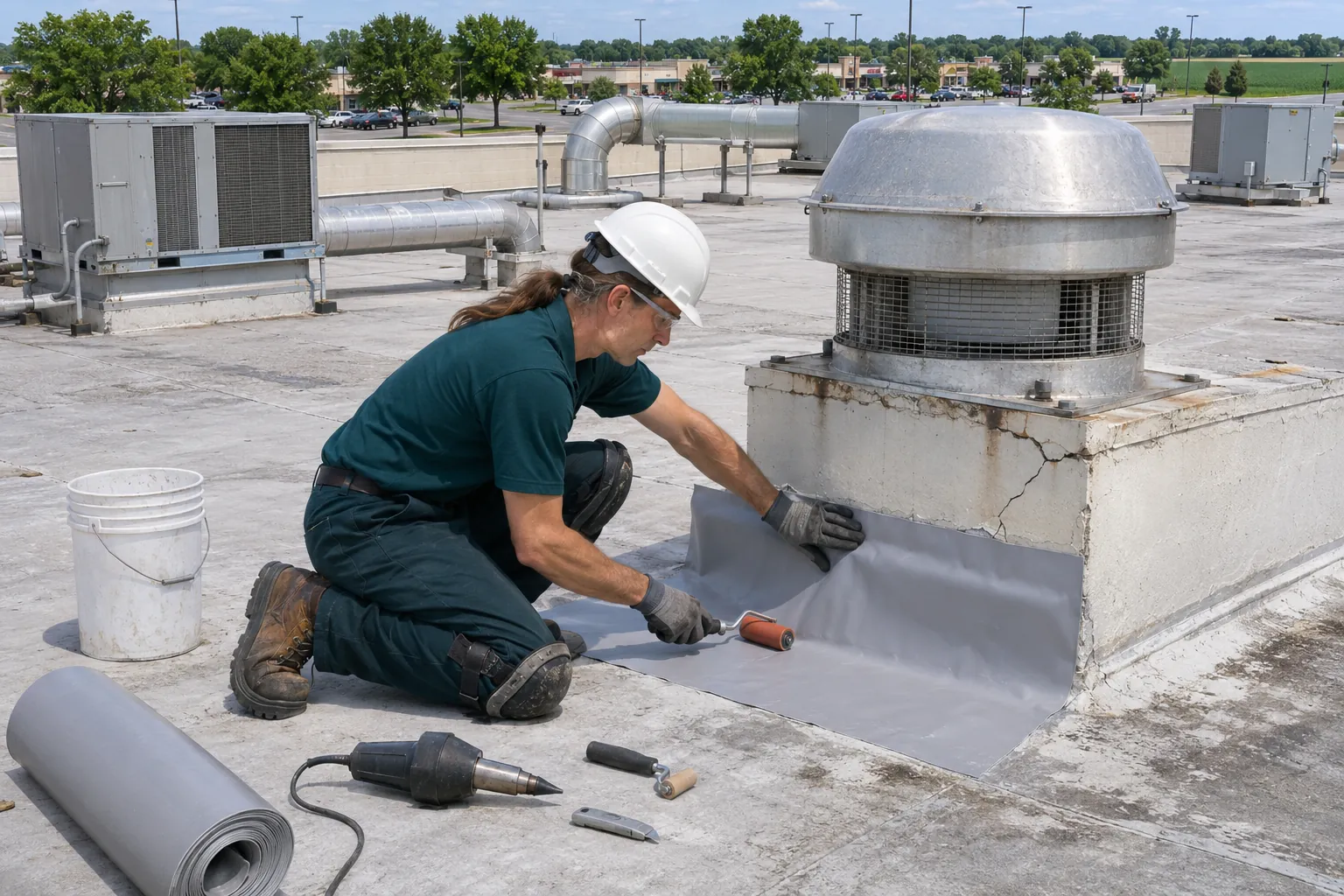
Plant and distribution roofs crowded with exhaust fans, stacks, and walkways. Residue-softened membrane, cracked fan curbs, loose expansion joint covers, and tired drains get repaired in sections around production.
Move people and equipment clear, catch the water, and shut off power to anything wet. Then call, and the first visit focuses on stopping the water.
Call UsSend the address and a few words about the roof, and we will set a time to walk it and list what needs repair.
Send roof details for an estimateStains, drips, and wet stock get marked inside, then the roof walk starts directly above and uphill of those marks.
A moisture meter and core cuts show how far water reached into the insulation, which sets the repair size.
If rain is coming, a temporary patch, a cleared drain, or a covered opening goes on before anything else.
Damaged membrane, flashing, panels, or fasteners get replaced with material matched to the roof around them.
You get photos of the source and the finished repair, plus a short note on anything else we saw up there.
Each roof failure below costs owners something different. The repair beside it closes that path for water.
Cracked corners let water into the ceiling grid above sales floors and exam rooms.
Reflashed curbs with sealed corners keep water outside the unit opening.
Standing water adds weight and finds every weak seam within reach.
Rebuilt drains and added slope move water off within hours of rain.
Soaked boards keep the ceiling dripping and let the membrane loosen from the deck.
Wet boards come out so the roof and ceiling dry for good.
Holes at panel ends spread inward and drip onto stock and racks.
Matching panels and new fasteners close the steel over the bay.
Retail centers, medical offices, warehouses, and plants in these towns are where we repair roofs most. Elsewhere in Lake County? Please call us or send us a message.
Quick answers to what owners and managers ask on the first call.
First, clear people and equipment from the leak, catch the water, and cut power to anything wet.
On the roof, the first visit stops the water with a temporary patch, a cleared drain, or a covered opening. The permanent repair comes once the area is dry and safe to work.
Look for a roofer who works on commercial systems, carries insurance, and holds a contractor license with the Town of Merrillville.
A good leak repair finds the source instead of sealing the drip point. Ask for photos of the problem and a written note on what was fixed.
Repair makes sense when damage is limited and most of the roof is dry.
Replacement starts to make sense when leaks show up in many places, insulation is wet across large areas, or the membrane has turned brittle. A moisture scan or core cuts settle which side your roof is on.
In most cases, yes. Nearly all of the work happens on top of the building, so stores below keep their doors open.
Loud work such as cutting out old membrane gets timed around business hours where possible, and merchandise gets covered if the deck has to be opened.
Price follows the roof system, the size of the damaged area, how long the leak takes to trace, whether wet insulation comes out, how much flashing is involved, and how hard the roof is to reach.
Work at rooftop units and walls takes more labor than a patch in the open field.
Check with the Merrillville Building Department, which reviews projects for code compliance and requires every contractor to be licensed with the Town.
Commercial buildings in Indiana follow the Indiana Building Code, 675 IAC 13. Whether a permit applies comes down to the scope of the repair.
Tell us where water is showing up and what kind of roof you have. We will walk it, find the source, and write up the repair.