A stain running down an outside wall
Likely Cause
Base flashing has pulled away from the parapet and water runs behind it into the wall cavity.
What We Do
Refasten the flashing with a termination bar and seal the top edge to the wall.
As a Crown Point commercial roof repair contractor, we fix parapet flashing, coping joints, and flat roof seams on storefronts and office buildings.
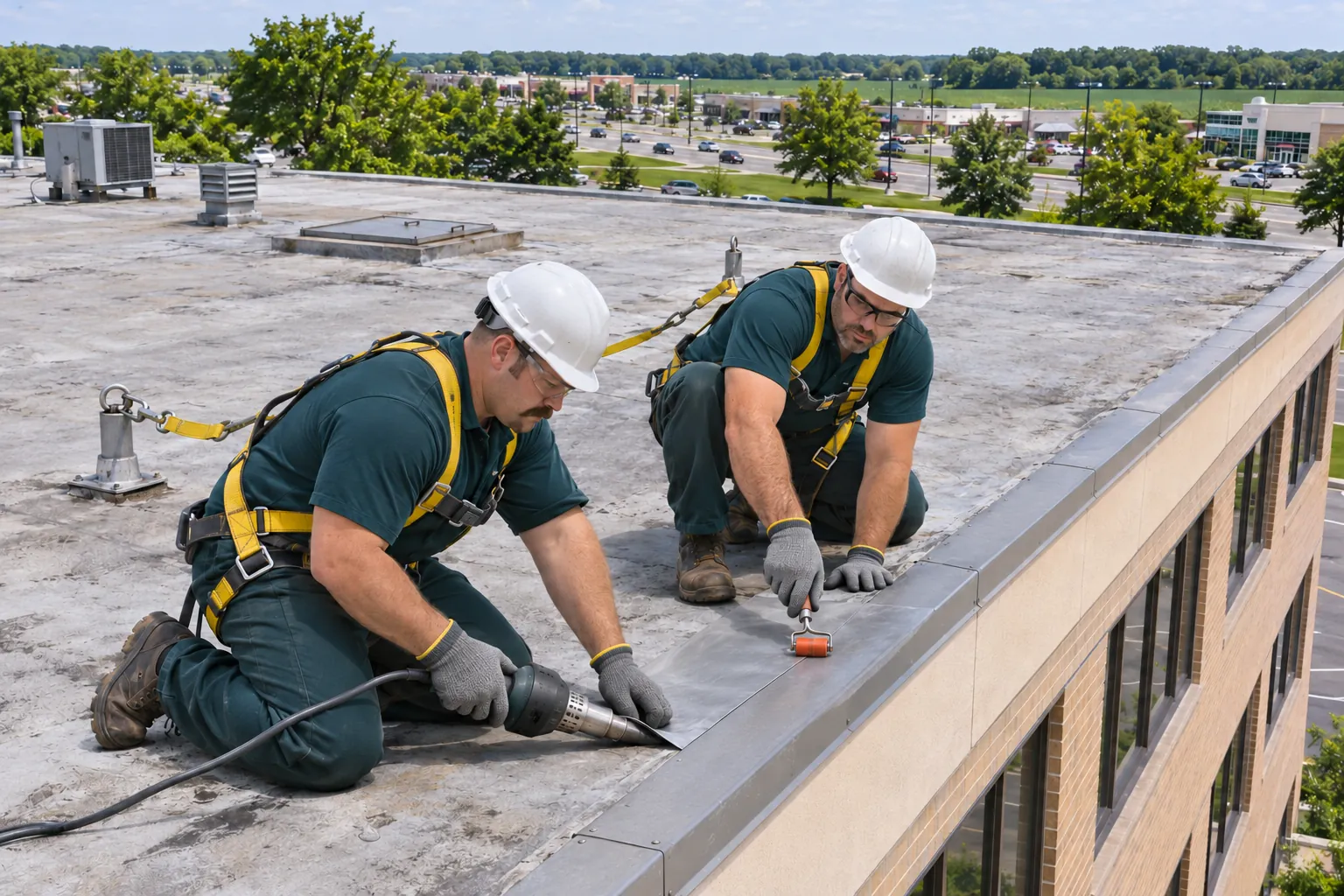
Crown Point commercial roof repair often starts at a wall. Parapets catch wind-driven rain, and the joint where wall meets roof is where many leaks begin.
On two-story storefronts and offices, water runs down behind loose base flashing or through open coping joints and shows up as a stain along an outside wall.
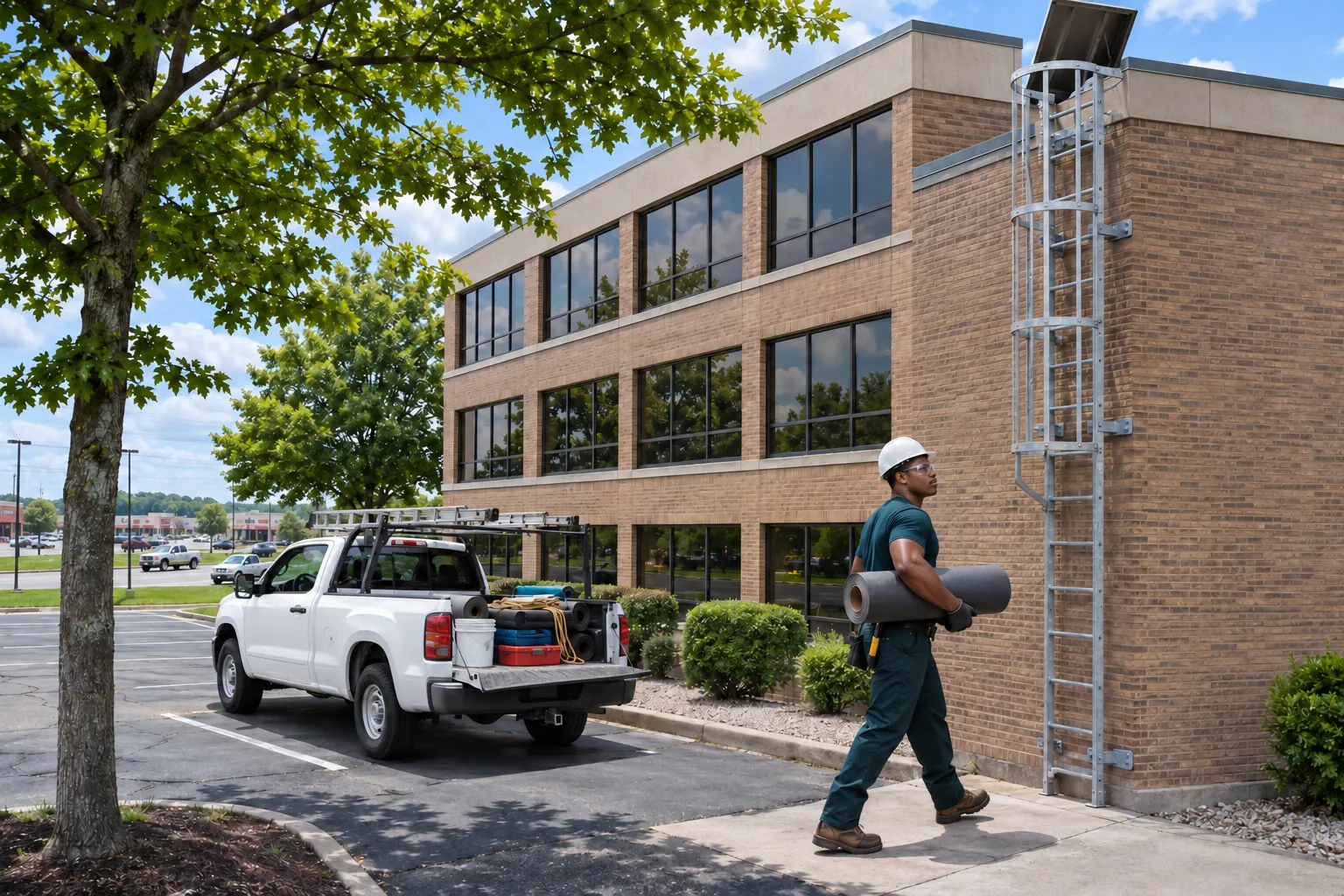
Ladders and material often go up from a side lot or alley, so access gets planned with the owner before the crew arrives.
Wall-side leaks look different from leaks in the middle of a roof. These are the ones we see most on parapet buildings.
Base flashing has pulled away from the parapet and water runs behind it into the wall cavity.
Refasten the flashing with a termination bar and seal the top edge to the wall.
Sealant at the coping joints has cracked, so rain drops straight into the top of the wall.
Clean the joints, add cover plates or new sealant, and reset any loose coping pieces.
Parapets on three sides trap water in corners when a scupper or drain is partly blocked.
Clear the scupper, check its flashing, and add a small cricket to push water out.
Moisture trapped under older built-up layers swells in summer heat and lifts the surface.
Cut out the blister, dry the area, and patch with cap sheet matched to the roof.
Fixing wall details keeps water out of the wall itself, where damage is hardest to see.
Water slips behind it and soaks the inside face of the wall.
A termination bar and sealed edge hold the flashing tight.
Each rain sends water into the top of the parapet.
Cover plates and fresh sealant close every joint.
Corners fill with water and press on the flashing.
Clear scuppers and crickets move water out of corners.
Lifted layers split and let rain under the surface.
Cut-out patches lie flat and seal to the roof.
Four repair services cover the roofs on Crown Point storefronts, offices, and shops.
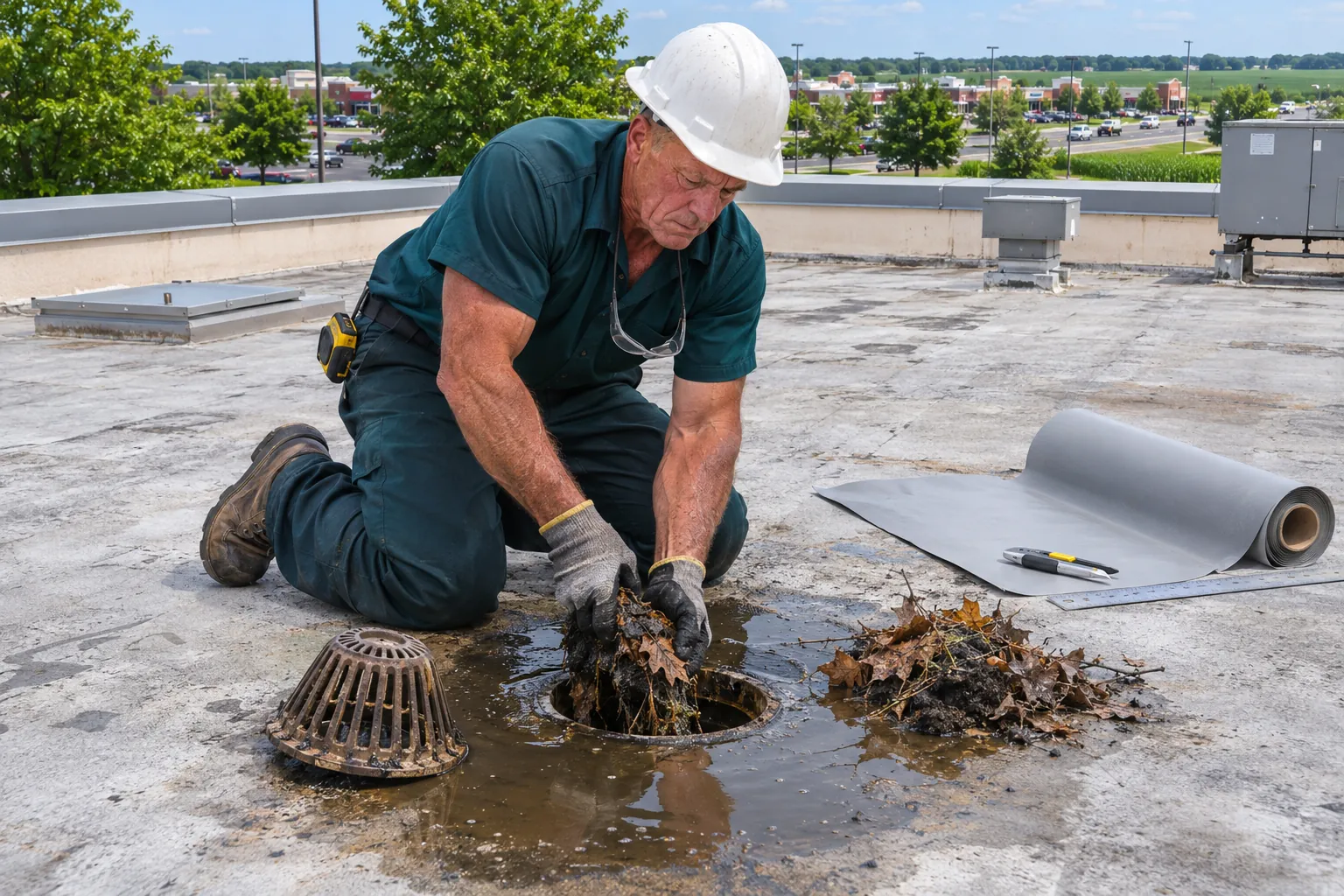
Flat membrane and built-up roofs behind parapets get seam patches, blister repairs, and scupper rebuilds that keep corners from holding water.
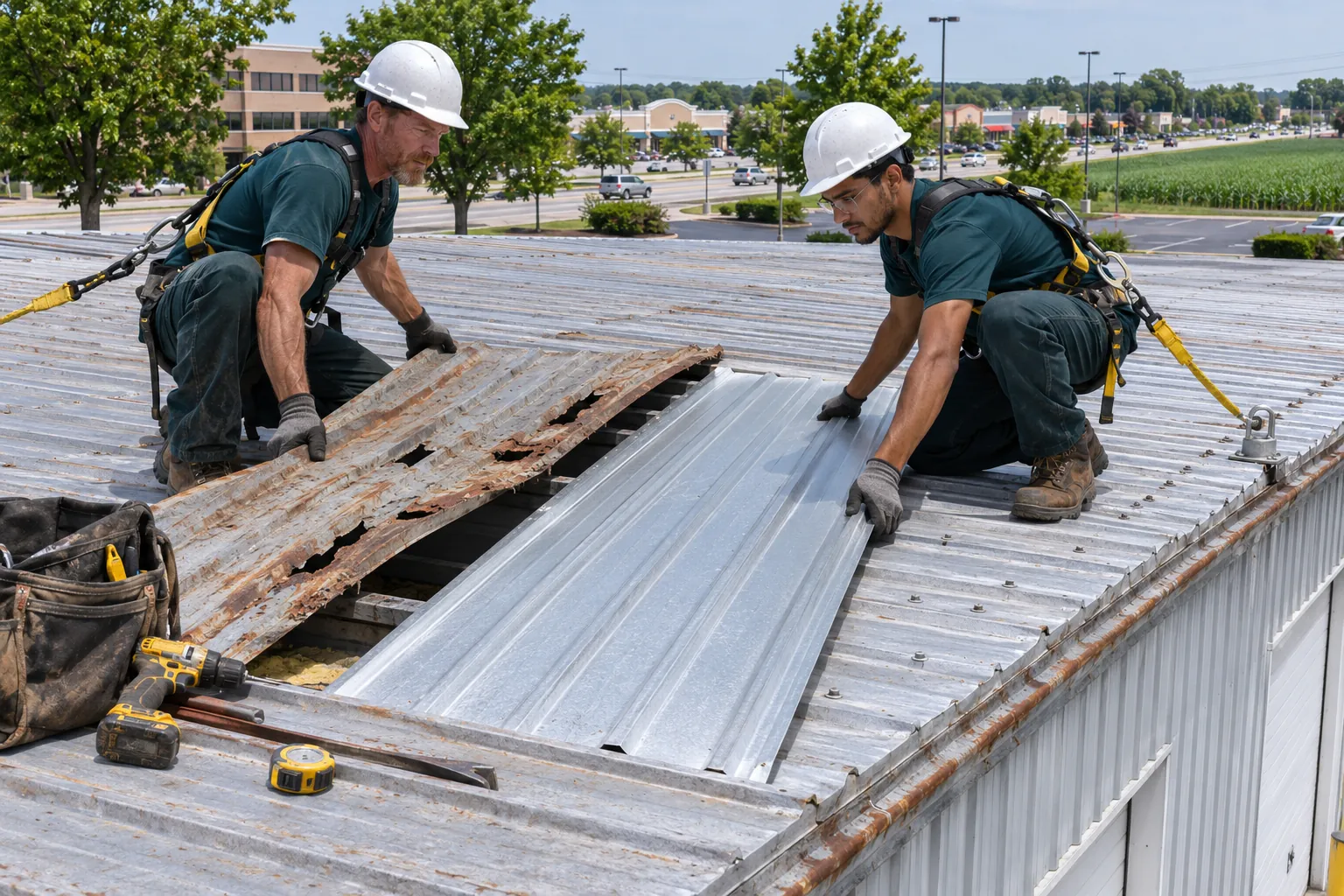
Steel shop buildings and rear additions with ribbed roofs get new screws, resealed laps, and replacement panels where rust has broken through.
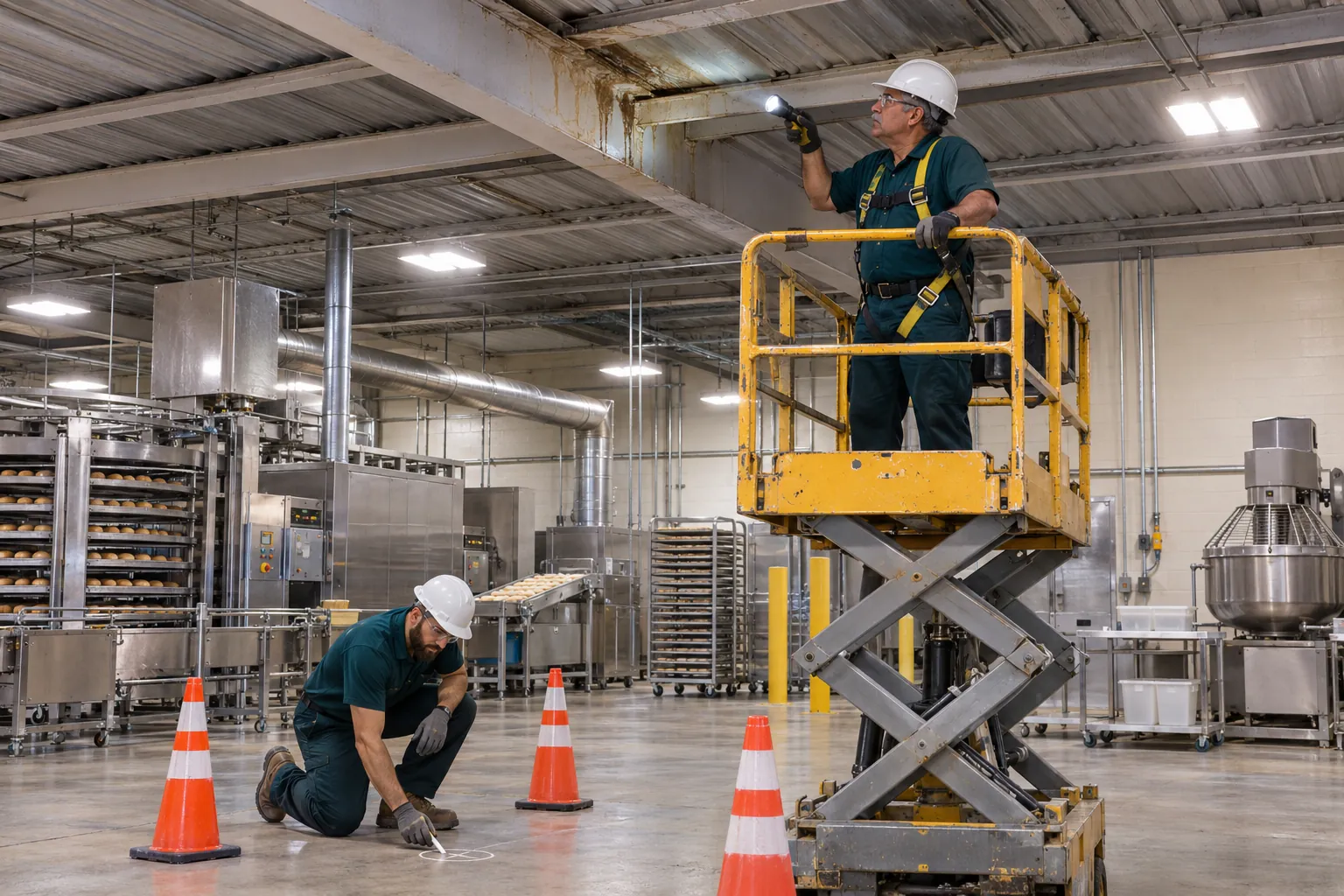
Wall stains that could come from the coping, the flashing, or a window get traced until the true entry point is found.
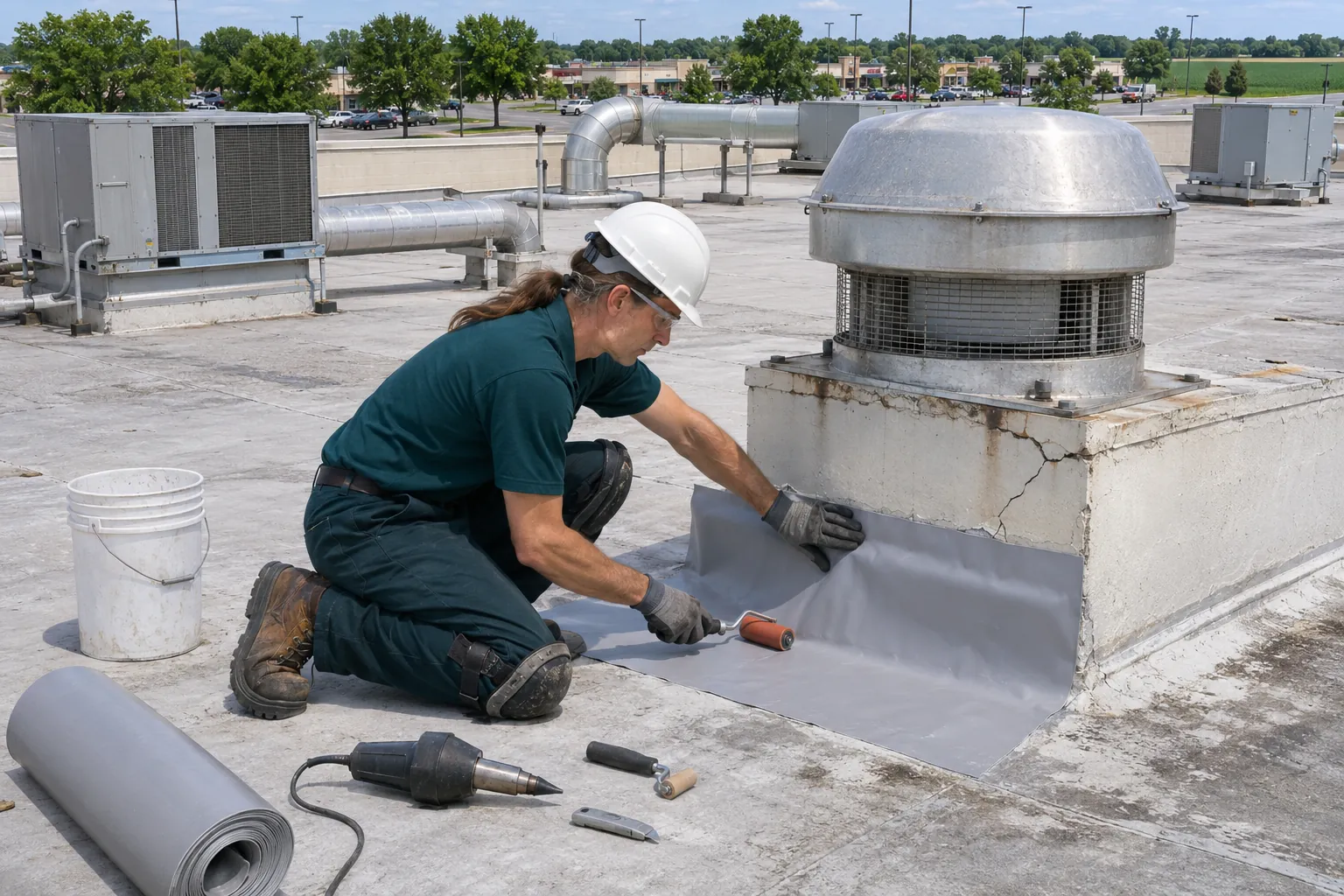
Industrial buildings on the edge of town get fan curb, drain, and expansion joint repairs timed around their shifts.
A wall stain usually means water is already inside the parapet. A call gets the flashing and coping checked before it freezes in there.
Call UsSend the address and which walls show stains. We will check flashing and coping on every side of the roof.
Send roof details for an estimateAll parapet faces get walked, with flashing height, termination edges, and coping joints checked on each side.
Ladder spots, sidewalk or alley use, and material staging are agreed so customers and tenants can still get in.
Joints and loose pieces at the top of the wall are sealed before any work happens lower down.
Flashing gets refastened or replaced and sealed under a termination bar along the wall.
Corners and scuppers get water tested, and photos of each wall go to the owner.
Not sure your building is in range? Please call us or send us a message. We also repair commercial roofs in Merrillville and the towns below.
What Crown Point owners ask about wall leaks and roof repairs.
Yes. Flat roofs, metal roofs, and roofs on industrial buildings in Crown Point all get repaired here.
Each job starts by finding where the water enters, then checking the details around it for the same wear, so the repair to the membrane, flashing, fasteners, or drain holds through the next storm.
Most parapet leaks come from loose base flashing or open coping joints. The repair refastens or replaces the flashing, seals its top edge under a termination bar, and closes each coping joint.
Corners and scuppers get checked too, since trapped water there pushes on the same flashing.
A small, dry blister can wait. Open seams, loose wall flashing, or a blocked scupper should not, because winter freeze-thaw cycles widen those openings. Cold-weather tapes and fastened patches can close them now, with a permanent repair once temperatures allow.
Water that gets in at the coping or behind the base flashing travels down inside the wall cavity.
It surfaces as a stain on the wall face, sometimes a full story below. Tracing starts at the top of the wall above the stain and works down to the roof.
Very little. Repairs happen on the roof, and ladders and materials go up from a side lot or alley where possible. Front entrances stay open, and any loud cutting work gets timed around business hours.
Point us to the walls and ceilings that show water. We will check the parapets above them and list each repair.