Find The Source
Traced Leak Repair
- Starting Point
- Inside, at the stain or drip
- Where It Looks
- Uphill along deck flutes and seams
- Wet Insulation
- Measured and replaced
- Records
- Photos of the source and fix
- Result
- The failed detail is repaired

As a Merrillville commercial roof leak repair contractor, we trace water from the ceiling to the failed roof detail and repair that source.
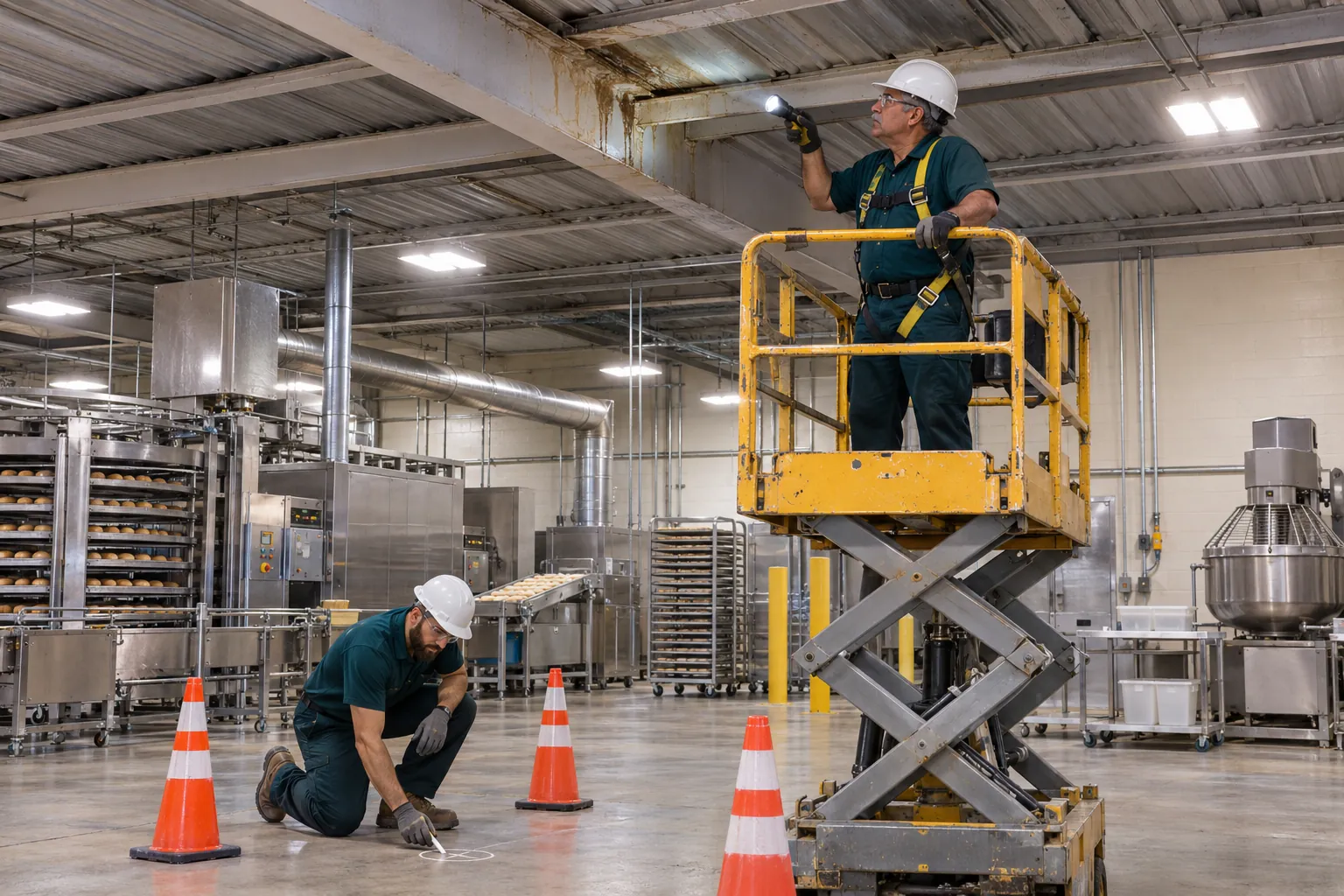
Merrillville commercial roof leak repair traces water to the detail that let it in. A dab of sealant above the drip rarely touches that opening.
Where and when a leak shows up says a lot about its source. These patterns come up most on Merrillville buildings.
Ice dams at cold edges, gutters, and drains hold snowmelt that backs up into laps and flashing.
Clear the blockage, seal the laps it reached, and look for insulation gaps warming the roof from below.
Slow drains let water rise past low flashing, or seams and penetrations open under that pressure.
Time each drain, measure flashing heights, and repair the details sitting above the wet ceiling.
Curb flashing has cracked, a corner opened, or the condensate line drains straight onto a seam.
Reflash the curb, seal its corners, and reroute the condensate line away from roof seams.
Summer heat dries curb sealant and shrinks old membrane where many rooftop units sit close together.
Reseal curbs, replace cracked sealant, and rebuild shrunken flashing at each affected unit.
Water rarely drips straight below the opening. These are the tools used to follow it back.
Drip points, stained tiles, and wet floor marks get recorded so the roof walk starts above the right bays.
Water travels along deck flutes and purlins, so the search moves uphill from the stain toward curbs and seams.
A meter and core cuts show how far insulation is wet, which sets how much gets cut out and replaced.
Controlled water on one detail at a time confirms the source before any material is replaced.
A traced repair closes the opening and removes what the water already damaged.
Water slips behind the flashing at a unit and runs down into the ceiling grid.
New flashing and sealed corners close the curb on all four sides.
Snowmelt trapped behind ice pushes into laps that were never built to hold standing water.
Cleared edges and resealed laps let melt run to the drains.
Soaked boards keep dripping for days and hide the true size of the leak.
Wet boards are cut out and replaced so the ceiling dries for good.
Unit drain lines dumping onto seams wash out sealant and soften the membrane.
Lines are redirected toward drains and the damaged seam is patched.
A stain that comes back after a patch usually means the source is somewhere uphill. A call starts the trace from inside the building.
Call UsSend the address and which suites or bays get wet. We will plan the trace and the repair around store hours and deliveries.
Send roof details for an estimateStained tiles, drip points, and wet stock get marked and measured from walls so they line up with the roof above.
Curbs, seams, skylights, and drains above and uphill of those marks get checked, since water follows the deck before it drips.
A controlled water test or moisture scan proves which detail is open before anything gets cut.
Flashing, seams, or panels at the source get rebuilt, and any wet insulation around them is replaced.
The interior gets checked after the next rain, and photos of the source and the repair go into the building file.
Once the source is found, the fix belongs to one of these roof types.
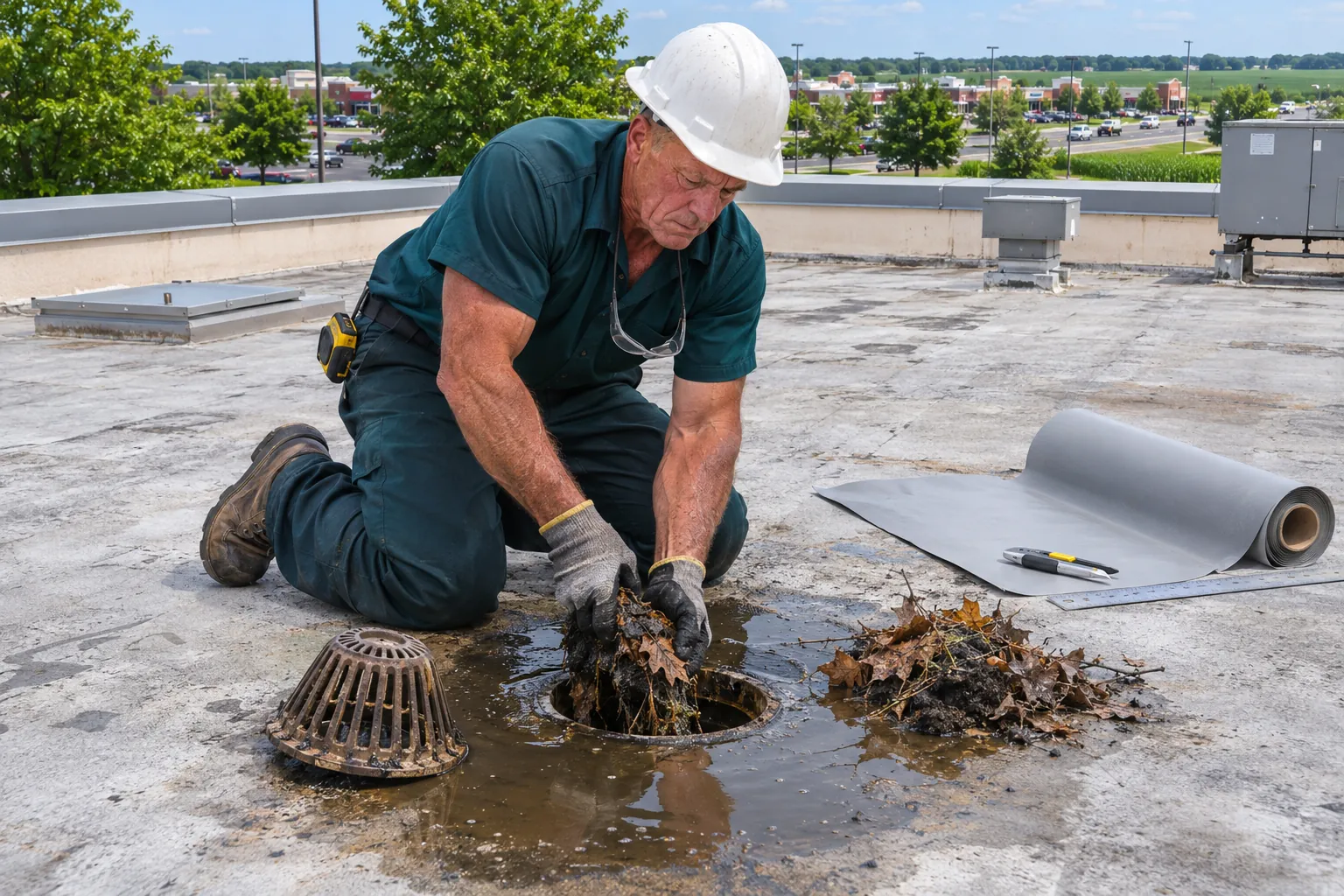
When the source is an open seam or a slow drain on a membrane roof, the fix becomes a matched patch and a rebuilt drain.
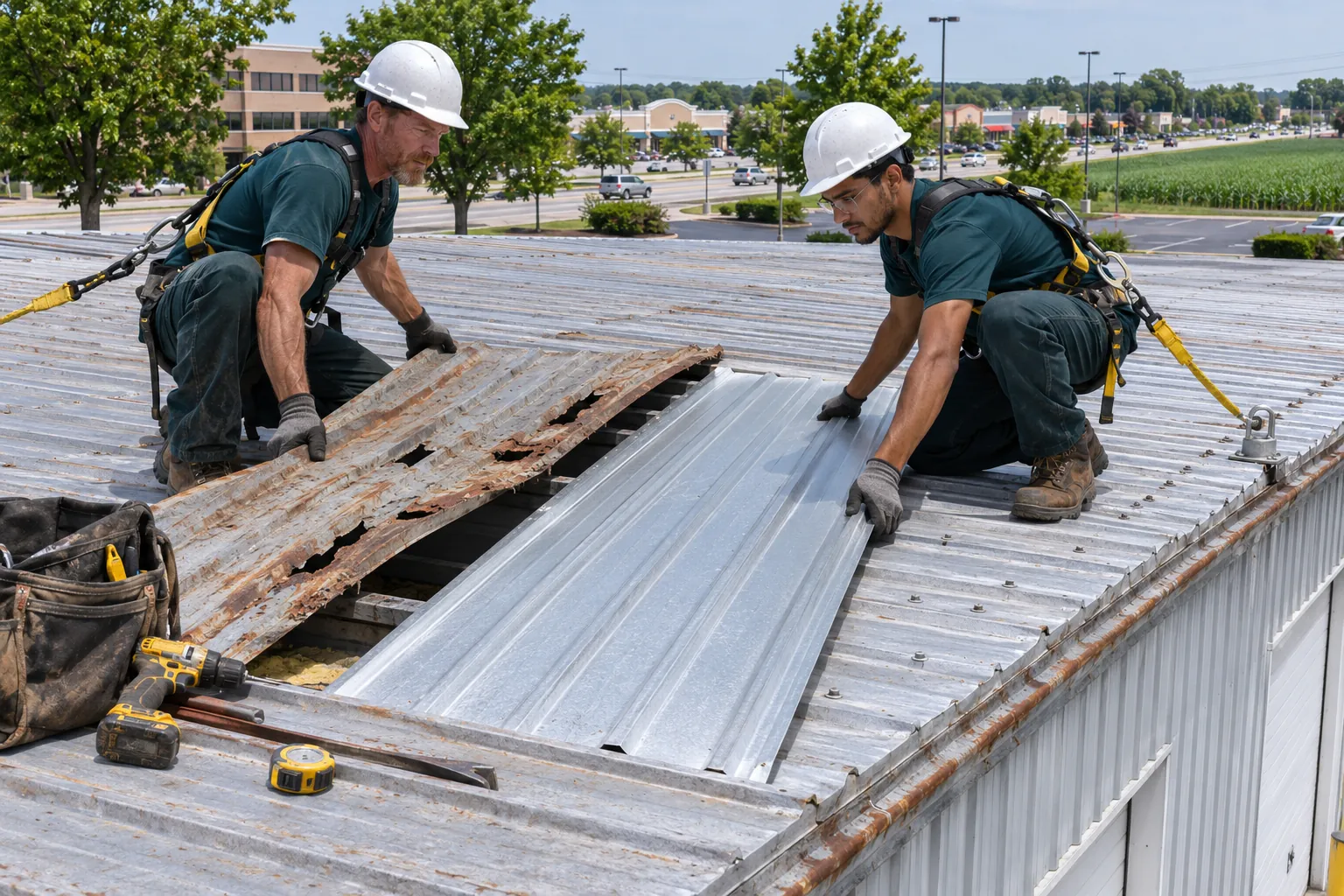
If the trace ends at a screw row or a dry lap on a steel roof, the repair moves to fasteners, butyl, and panel work.
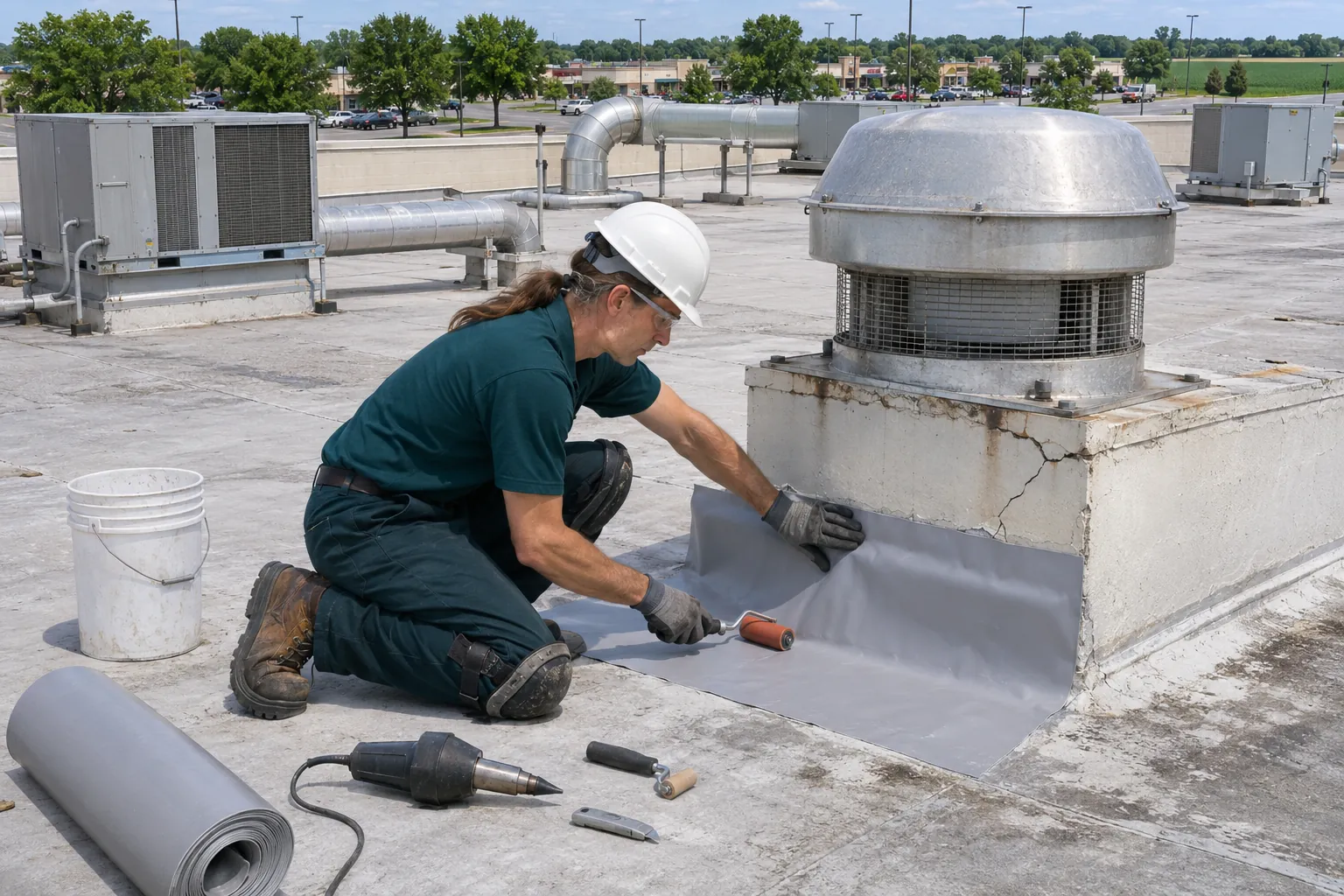
Leaks over production floors often trace to fan curbs or expansion joints. Those repairs get scheduled around the line.
Answers to the leak questions building owners and tenants ask most.
Snowmelt refreezes at cold edges, gutters, and drains, forming a ridge of ice that holds water behind it. That water backs into laps, seams, and flashing never meant to stand underwater.
The fix clears the dam, reseals what it reached, and looks for heat escaping through gaps in the insulation.
No. A healthy commercial roof stays dry in heavy rain. Leaks that only show in hard storms point to slow drains, water climbing over short flashing, or seams and penetrations that open under pressure.
Testing drains and checking the details above the wet ceiling finds which one it is.
Mark where water shows inside, then check the roof above and uphill, because water runs along deck flutes before dripping.
Long warehouse roofs in Merrillville often mix metal and single-ply sections, so seams, screws, curbs, skylights, and drains in that zone all get checked, then water testing confirms it.
Most rooftop unit leaks come from cracked curb flashing, open corners, dried sealant at the unit base, or a condensate line draining onto the roof.
The curb gets reflashed, the corners sealed, and the line redirected, and the unit panels and ductwork get checked too, since water can enter through the equipment.
It can. Heat dries caulk, shrinks aging membrane at walls and curbs, and loosens fasteners through daily expansion.
Medical office buildings in Merrillville often carry many rooftop units, so curb corners are where heat damage turns into leaks. Resealing curbs and rebuilding shrunken flashing closes them.
Send us where the water appears inside and when it started. The trace begins there and ends at the roof detail that let it in.