Refasten And Reseal
Repair The Metal Roof
- Panels
- Solid underfoot, few holes
- Fasteners
- Backed out, washers cracked
- Rust
- Surface rust, edges intact
- Purlins
- Straight and dry
- Next Step
- Screws, laps, a few panels
As a Merrillville commercial metal roof repair contractor, we replace worn screws, reseal laps, and swap rusted-through panels on steel buildings.
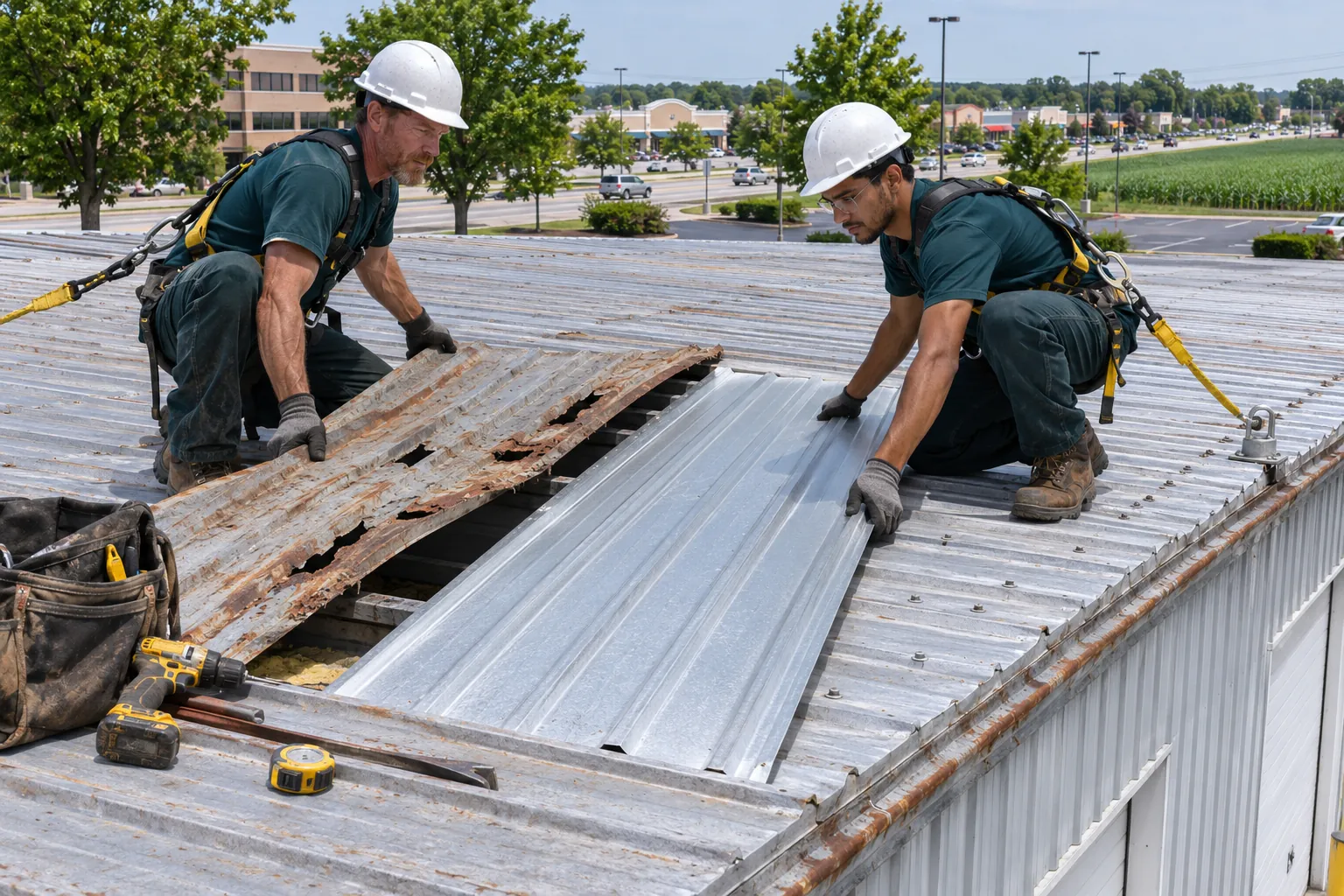
Merrillville commercial metal roof repair handles fasteners, laps, and a few bad panels. A new roof or retrofit comes up when the steel itself is failing across the building.
Steel roofs leak in a handful of predictable places. The sign usually tells us which one before we climb the ladder.
Rubber washers crack with sun and age, and screws back out as panels expand and shrink every day.
Pull the leaking screws, set oversized fasteners with new washers, and redo the whole run nearby.
Sealant inside the side lap has dried out, so wind-driven rain gets pushed sideways through the joint.
Open the lap, clean it, lay new butyl tape, and stitch it closed with fresh lap screws.
Rust ate through the low end of the panel where water and debris sit at the eave.
Cut out the bad panel, check the purlin beneath it, and set a matching profile with sealed laps.
Hail cracks washers, splits seam sealant, and breaks skylight panels while leaving only dents on the steel.
Replace damaged fasteners and skylights, reseal seams, and photograph the damage for the claim file.
Each method matches the part that failed. Panels, screws, and trim are matched to what is already on the building.
Oversized screws with new EPDM washers bite into fresh metal where the old hole has worn wide.
Butyl tape and stitch screws close side laps, end laps, and ridge caps that have opened with movement.
Rusted-through or hail-split sheets come off and same-profile panels go on with sealed laps on both sides.
Cracked fiberglass skylight panels and loose wall trim get replaced and sealed where they meet the roof.
Metal roof leaks spread from one tired detail to the next. Each repair below closes one of those paths.
Cracked washers let water run down the screw shank and onto stock or equipment below.
Fresh oversized screws and washers seal each hole along the line.
Wind pushes rain sideways through dry laps on the windward side of the building.
New butyl and stitch screws close the overlap tight.
Holes at the eave spread inward and let water onto purlins and insulation.
Matching panels replace the rusted sheets after the purlin is checked.
Brittle fiberglass panels split under hail or foot traffic and leak in every rain.
New skylight panels go in with sealed laps and fasteners.
A straight line of drips under a metal roof usually means a run of failed washers. A call gets those screws replaced before rust starts around the holes.
Call UsSend the address and the storm date. We will walk the panels, note cracked washers and split seams, and photograph what we find.
Send roof details for an estimateMarks on the floor and ceiling show which bays leak, so the roof walk starts above the right purlins.
Washers, screw heads, and the holes beside them get checked along every row near the leak, uphill and down.
Side laps and end laps near the wet bays get opened to see if the sealant has dried or slipped.
New screws, butyl tape, matching panels, and skylight or trim pieces go in where the old ones failed.
Before and after photos of each repaired area go to the owner for records or an insurance file.
Steel buildings often carry a flat office section or rooftop equipment. These repairs cover those areas.
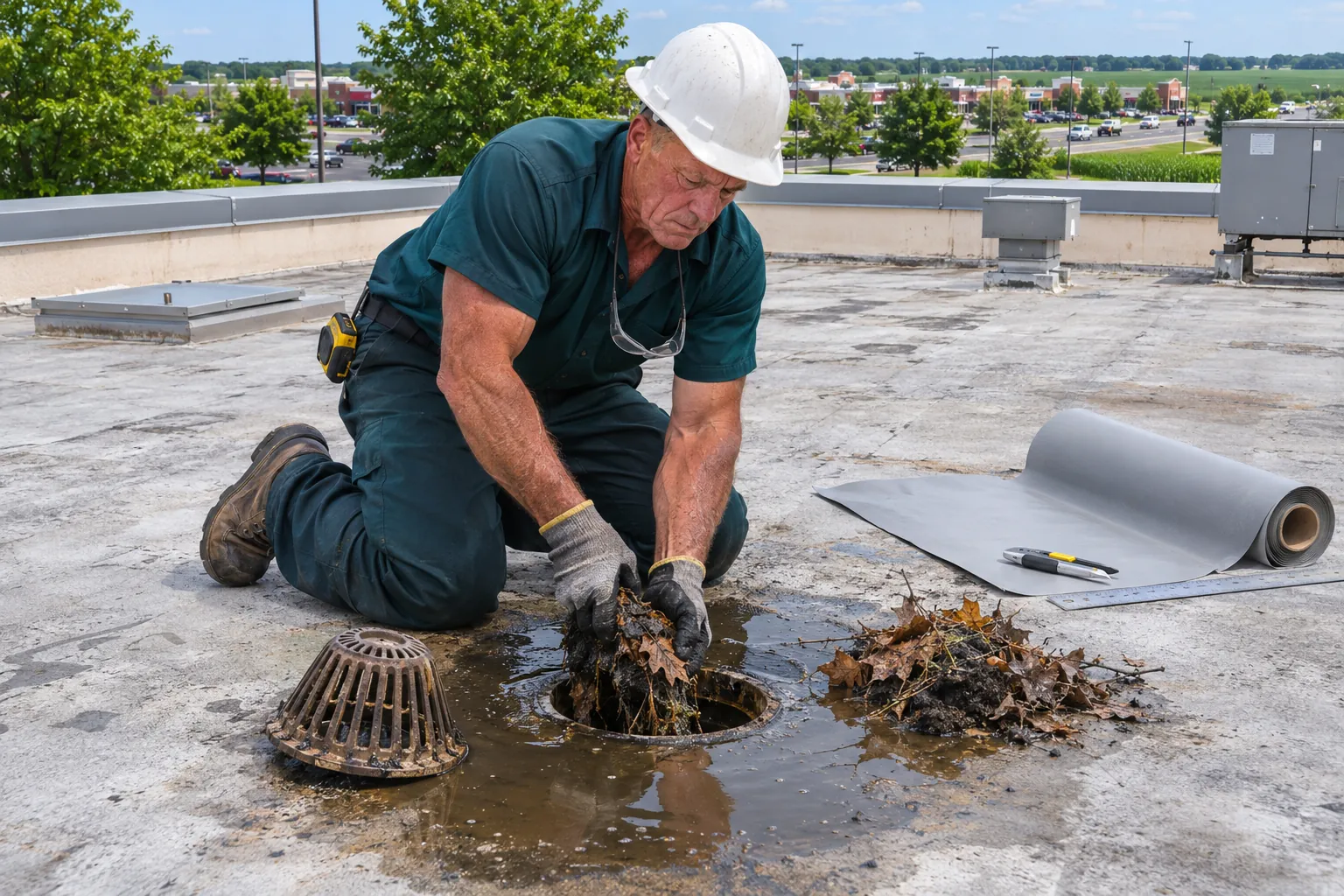
Many steel shops have a flat-roofed office or showroom attached. That membrane gets patched and its drains rebuilt with flat roof methods.
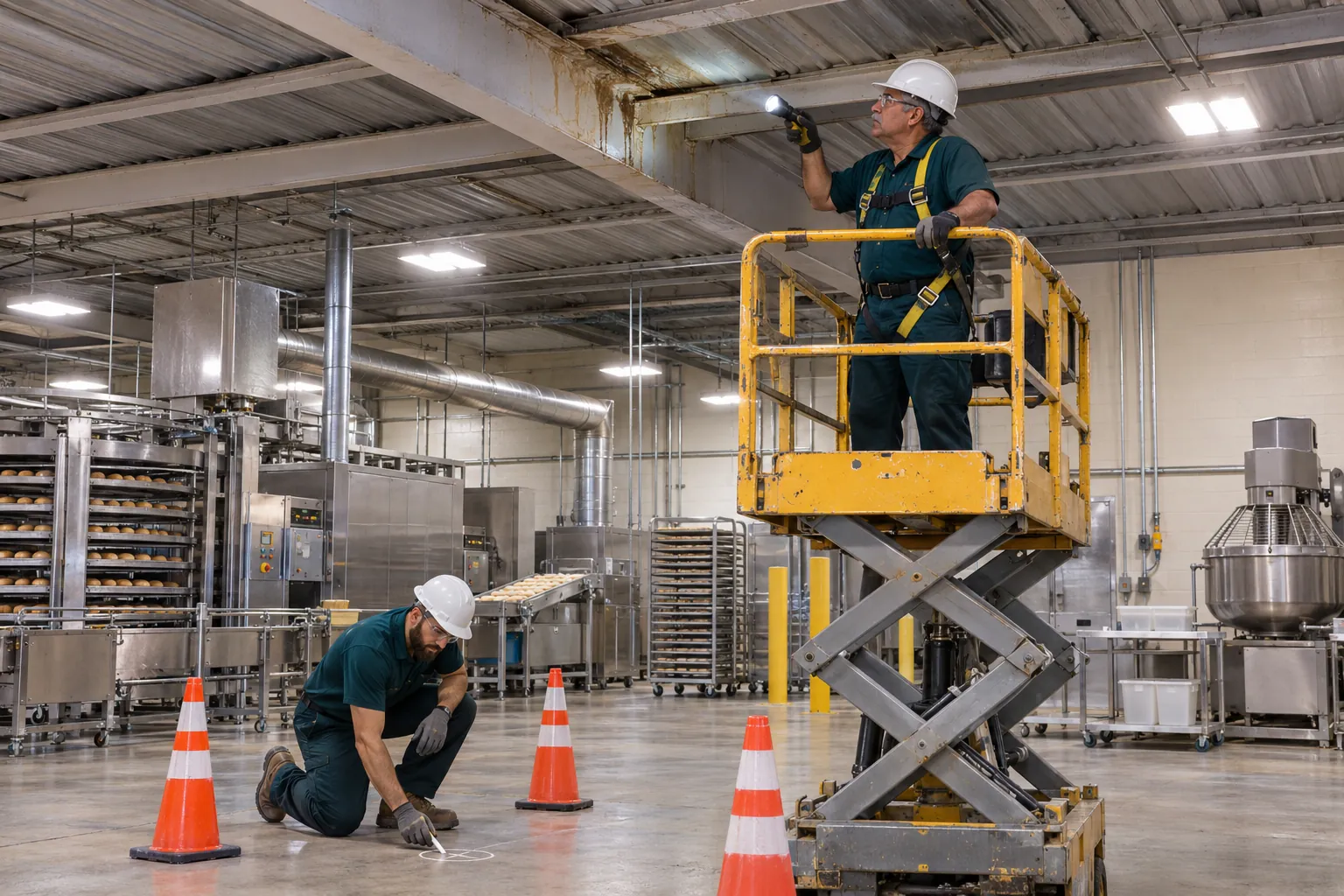
Water inside a metal building can run along a purlin for many feet. Leak tracing finds where it really enters before panels get pulled.
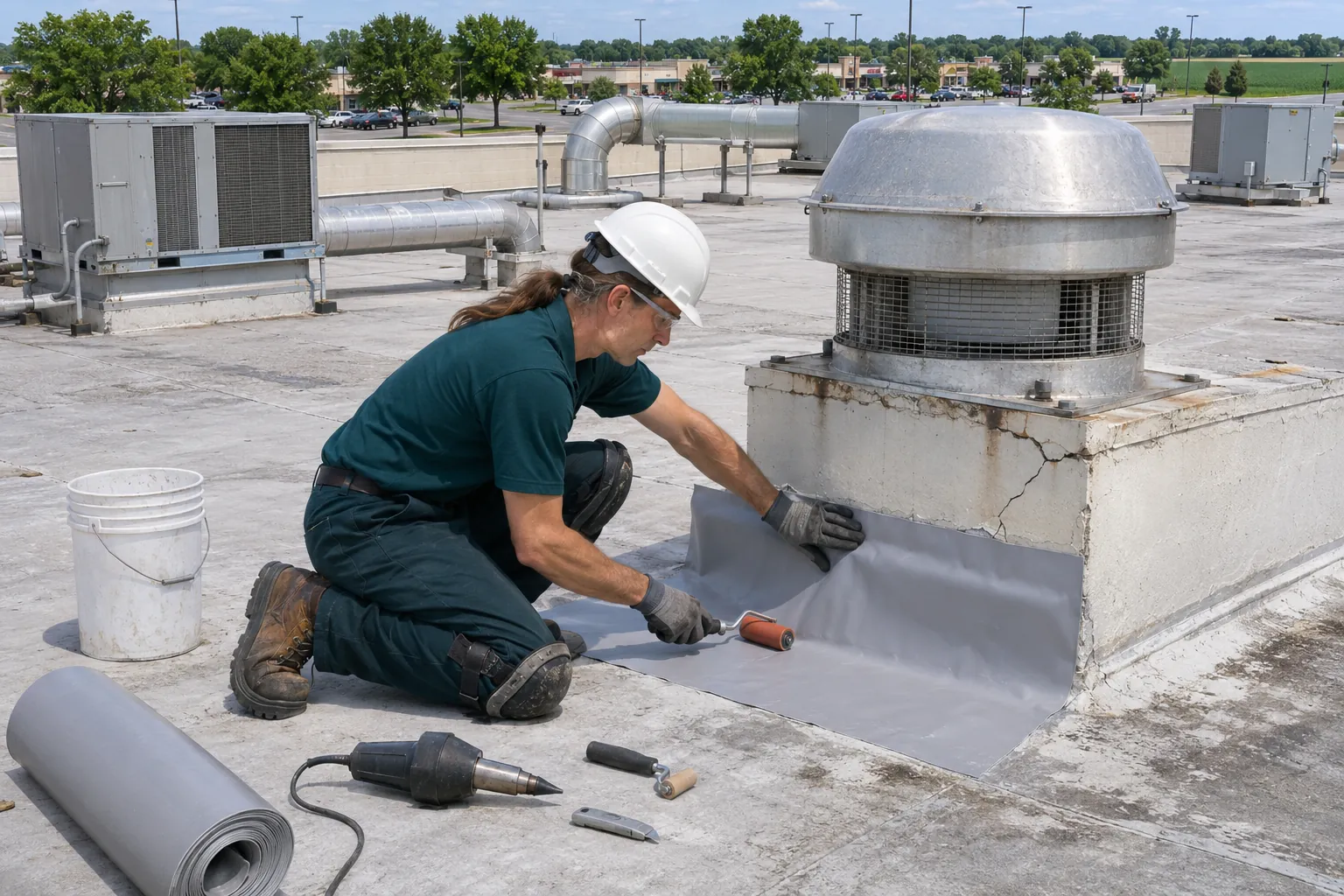
Metal plant roofs with exhaust fans and vents need curb and residue repairs alongside the screw and lap work.
What owners of steel shops and warehouses ask about leaks and repairs.
Hail repair covers punctured panels, split seam sealant, cracked fastener washers, and broken skylights or ridge caps. Dents alone are mostly cosmetic. Open seams and cracked washers are what leak, so those get replaced first, and the damage is photographed for any insurance claim.
Worn fasteners top the list. Washers crack with sun and age, and daily panel movement backs screws out a little at a time.
Dry side laps, rusted panel ends, and loose wall and curb flashing come next, which is why we check the whole fastener pattern around a leak.
The leaking screw comes out and an oversized screw with a new washer goes in so it bites into fresh steel.
A hole worn too wide for that gets a sealed metal patch. Neighboring screws usually have washers just as old, so the full run in that area gets replaced.
Replacement is due once rust has eaten through, left holes, or made the panel soft underfoot. Surface rust on solid steel can be treated, but missing metal has nothing left to seal.
The damaged sheets come off, the purlins get checked, and matching panels go on with new fasteners.
Water caught in a lap or around a screw freezes, expands, and pries the joint a little wider each cycle.
Temperature swings also move the panels and back screws out. A spring check that reseals laps, replaces loose screws, and refastens flashing stops those small gaps from becoming leaks.
Mark the bays that drip and send us the address. We will check the screw rows and laps above them and list every repair.